INTERNATIONAL DARK SKY ASSOCIATION vs. FCC AND SPACEX
On December 29, 2022, the International Dark-Sky Association (IDA) sued the U.S. Federal Communications Commission over its decision to approve SpaceX’s application for up to 30,000 more low-orbit satellites, in addition to the 12,000 already approved and in process of filling our skies. This is Case No. 22-1337 before the United States Court of Appeals for the District of Columbia Circuit, and has not yet been decided by the court.
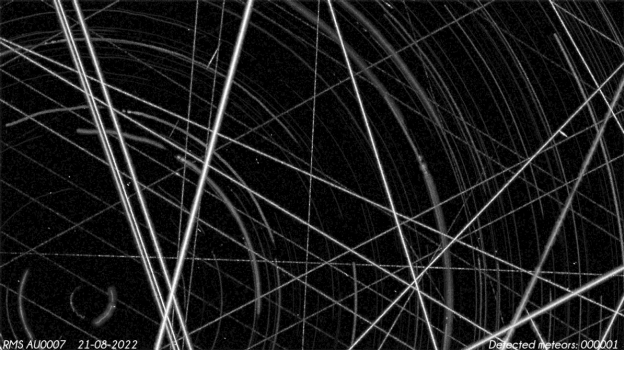
Long-exposure photographs of the sky by astronomers already look like this:
The above photo was taken by an amateur astronomer in a suburban location in Western Australia. The circular tracks are stars. The much brighter straight tracks are all satellites, except for one track which is a meteor.
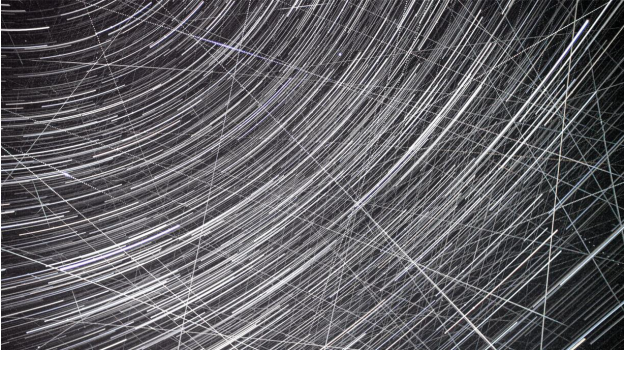
Below is a 77-minute exposure taken by astronomer Dave Thanatos in Salisbury, England. In this darker location, the circular tracks of the stars are brighter than the straight tracks of the meteors and satellites which, however, fill the entire frame of the photograph. There are only 10 meteors in this picture. All the other straight tracks are satellites. And as Scottish astronomer Andy Lawrence, lead author of “The Case for Space Environmentalism,” said, “Good luck telling the difference!”
American plasma physicist Sierra Solter implored the FCC to “please save our night sky… Please, please, don’t take away my stars. To feel that my place of comfort and calm — a starry sky — is being taken away and given to billionaires is suffocating.”
On December 18, 2023, Ms. Solter published a scientific article detailing her fear for our planet. Each of the 42,000 planned Starlink satellites, she wrote, has a design lifespan of only 5 years, after which it will be de-orbited, burned up in the atmosphere, and replaced. She calculated that this will require 23 satellites per day — each the size of an SUV or truck — to be burned up in the atmosphere forever into the future, leaving an enormous amount of toxic chemicals and metallic dust to accumulate in the air we breathe and in the ionosphere.
This is already happening, she wrote, and should be stopped if we value our lives. “Since the beginning of the space industry, approximately 20,000 tons of material have been demolished during reentry… This amount is over 100 billion times greater than [the mass of] the Van Allen Belts.” She estimated that if 42,000 Starlink satellites are deployed and regularly demolished — let alone the 1,000,000 satellites planned by other companies and governments — “every second the space industry is adding approximately 2,000 times more conductive material than mass of the Van Allen Belts into the ionosphere.”
“Unlike meteorites, which are small and only contain trace amounts of aluminum, these wrecked spacecraft are huge and consist entirely of aluminum and other exotic, highly conductive materials,” she explained in an April 16, 2024 article in The Guardian.
Much of the metallic dust will settle into the ionosphere where, she says, it could act as a magnetic shield, reducing the magnitude of the Earth’s magnetic field in space. If that happens, the atmosphere itself could eventually be destroyed, because the Earth’s magnetic field — the magnetosphere — is what deflects the solar wind and prevents it from stripping away Earth’s atmosphere, as she told Teresa Pulterova in an interview on Space.com.
Other astronomers involved in the litigation before the FCC and now the Court of Appeals include Meredith Rawls with the Vera C. Rubin Observatory in Chile; Gary Hunt with Action Against Satellite Light Pollution in the UK; Samantha Lawler at the University of Regina in Canada; Graeme Cuffy of Port of Spain, Trinidad and Tobago; Mark Phillips, President of the Astronomical Society of Edinburgh; Roberto Trotta of the Imperial Centre for Inference and Cosmology in London; Carrie Nugent, Associate Professor of Computational Physics and Planetary Science at the Olin College of Engineering in Massachusetts; and Cameron Nelson of Tenzing Startup Consultants in Virginia.
Other issues are also mentioned in the appeal. For example, the burned up aluminum produces aluminum oxide, which destroys ozone and contributes to climate change. So does the water vapor, soot, and nitrogen oxides in rocket exhaust.
Cameron Nelson told the FCC that “Humans, not to mention all other animal and plant life, have notgiven our consent for SpaceX to send the signals it is proposing into our bodies and irrevocably alter us.”
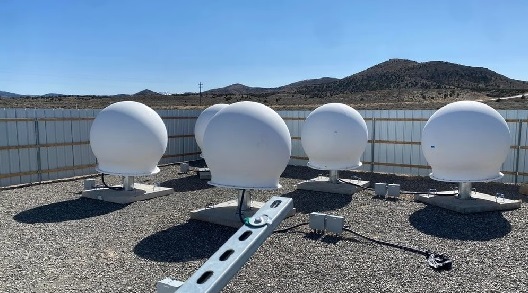
The BroadBand International Legal Action Network (BBILAN) mentioned “RF/EMF radiation from linked base and earth stations” in comments sent to the FCC. Starlink earth stations, also called Gateways, are far more powerful than the Starlink dishes that people are putting on their homes. The (as of March 2024) 2.6 million Starlink dishes each send one signal up to the moving network of satellites above them. All of this traffic is coordinated in space by thousands of lasers linking the satellites to one another, and on the ground by Gateways, which relay the thousands of signals in a large geographic area to and from the satellites. This is what a Gateway with 5 antennas (“radomes”) looks like:
Some Gateways have up to 40 radomes. Each of those domes weighs 1750 kilograms. Each aims a narrow beam at moving satellites. According to FCC filings by SpaceX, each beam can have an effective radiated power of more than 1,000,000 watts, which it can aim as low as 25 degrees above the horizon. If you are a bird you do not want to fly anywhere near a Starlink Gateway. And if you are a human you do not want to live near one either. When a satellite aims its beam containing thousands of signals at a Gateway, that beam is about 10 miles in diameter by the time it reaches the Earth.
Robin is a subscriber who lives in a remote area of Idaho less than 3 miles from the Starlink Gateway in Colburn. She writes about effects on her family and her animals — effects that disappear when they are at their other home in Montana where they are surrounded by National Forest. The effects on her guinea hens are similar to the effects I wrote about in my last newsletter:
“Our guinea hens make a strange noise while moving in a circle. This only happens in Idaho where we live within 3 miles from a SpaceX ground station. We never see this phenomenon in Montana.
“We also had 2 separate litters of Chihuahua puppies born. Both litters had defects, and both lost a puppy and were smaller in size. The very same thing happened with our cat, small litter, birth defects and the loss of one kitten. There was a fire last year and we were forced back to Idaho and are making EVERY EFFORT to move away from the gateway and our neighbors’ Starlink dishes as quickly as possible. My health is a concern here, but when I go home to Montana I am fully recovered as are my husband and son. We live off grid both places. No electricity, no running water, and it’s a crying shame what is happening to the world with all these manmade devices.”
When in Idaho, Robin suffers from extreme vertigo and nausea, burning migraines, severe pain in her spine and all her joints, tingling in her fingers and toes, memory problems, “extreme gut pain, and at times stabbing pain in gall bladder and liver,” bradycardia, tooth pain and sinus infections, and “severe heart palpitations to the point where I’m gasping for breath while my heart pounds.” Her husband has joint pains, frequent urination during the night, and headaches. Her son has heart arrhythmias, stabbing pains in the gut, and brain fog. She and her husband hear the radiation. “We’re hearing a sort of sped-up Morse code,” she says. “When I go home to Montana I am fully recovered as is my husband and son.”
Robin knows many people in her area who are similarly affected. She adds that “when we first moved here in 2019 we had A LOT of birds. We now have a silent spring, it’s like a dead zone. I’ve heard/seen one Robin and just a handful of birds. We used to put out 11 hummingbird feeders and as of last year we only need one. There were quite a few black bears and a couple of grizzlies but now only one grizzly is around.”
At last count there were 277 Starlink Gateways in operation or under construction in the world: 181 in North America and the Caribbean, 26 in South America, 2 in Africa, 26 in Europe, and 42 in Asia and the Pacific.
The FCC maintains a webpage listing thousands of licenses that it has handed out to hundreds of companies to operate both fixed and mobile satellite earth stations in the United States. Some of these stations are far more powerful than the Starlink Gateways. SES’s earth station at Bristol, Virginia emits up to 1,900,000,000 watts of effective radiated power, and it is allowed to aim it as low as 5 degrees above the horizon. SES’s earth station at Brewster, Washington is allowed to emit almost 1,000,000 watts in the actual direction of the horizon! SES owns O3b mPOWER, which is the satellite system that had its first radomes on board the Diamond Princess cruise ship, the ship that had the famous outbreak of disease blamed on COVID-19 at the beginning of the pandemic.
Submission to Fish and Wildlife Service on the American Bumble Bee
October 6, 2021
U.S. Fish and Wildlife Service
MS: PRB/3W
5275 Leesburg Pike
Falls Church, VA 22041-3803
Attention: Louise Clemency, Chicago Ecological Services Field Office
Re: American Bumble Bee Docket No. FWS–R3–ES–2021–0063
THREAT TO THE AMERICAN BUMBLE BEE FROM RF RADIATION
In response to a petition from the Center for Biological Diversity, the Fish and Wildlife Service published a Notification of Status Review on September 29, 2021 in the Federal Register. The Service proposes to list the American bumble bee as a threatened or endangered species and requests comments and new information concerning threats to the existence of that species. In its Notification, FWS lists four threats that to the American bumble bee that it has identified: habitat destruction, loss of genetic diversity, climate change, and competition from nonnative honeybees.
I submit the following information regarding a fifth threat to this species: radio frequency (RF) radiation. RF radiation is a threat to both honeybees and bumble bees and is a greater and more urgent threat to the American bumble bee than any of four threats the Service has listed. This pollutant has been responsible for reducing both domestic and wild bee populations for more than a century. This threat to bees has intensified since the beginning of the wireless revolution in 1996, with the construction of hundreds of thousands of cell towers and antennas in all areas of the United States including farmland, forest land, parkland, and nature preserves. It has become an emergency in the past two years with the national rollout of 5G technology, which is multiplying the density of antennas tenfold and more, as well as increasing the frequency, bandwidth, and effective radiated power from each antenna. Cell towers are already exposing the entire world to levels of RF radiation that are up to ten million times stronger than the natural radiation that comes from the sun and stars.
Mechanisms of Action
RF radiation is a form of electromagnetic energy that is used for communication. It is emitted by radio and TV towers, radar stations, cell towers, cell phones, and all of the other wireless devices that are proliferating in today’s world. It interferes with navigation, communication and metabolism in bees. It is the effect on metabolism that is killing bees the quickest and driving them to extinction.
Metabolism
Electronic devices and systems manufactured today must be hardened against electromagnetic interference (EMI) from RF radiation coming from so many sources today. A living organism is also electronic in nature and is also subject to EMI. However, life evolved in the virtual absence of RF radiation and is not hardened against it. This radiation affects biology in many ways, but most critical for bees is the interference with electron transport in the mitochondria of cells. The electron transport chain is which is where the last, energy-producing step in metabolism takes place. It is where electrons generated by the metabolism of the sugars, fats and proteins we eat are transferred to the oxygen we breathe, resulting in the generation of ATP. Interference with metabolism affects bees more than other creatures because bees have such a high metabolic rate. It deprives them of energy by starving them of oxygen.
That this actually happens was proved in 2011. N. Kumar, S. Sangwan and P. Badotra, “Exposure to Cell Phone Radiations Produces Biochemical Changes in Worker Honey Bees.” ToxicologyInternational 181(a):70-72 (2011). These researchers exposed bees to an ordinary cell phone and sampled their hemolymph. After 10 minutes of exposure to a cell phone, the concentration of total carbohydrates in their hemolymph increased from 1.29 to 1.5 mg/ml. After 20 minutes it increased to 1.73 mg/ml. The glucose content rose from 0.218 to 0.231 to 0.277 mg/ml. Total lipids rose from 2.06 to 3.03 to 4.50 mg/ml. Cholesterol rose from 0.230 to 1.381 to 2.565 mg/ml. Total protein rose from 0.475 to 0.525 to 0.825 mg/ml. In other words, after just ten minutes of exposure to a cell phone, metabolism of sugars, fats and proteins was severely inhibited.
If bees cannot metabolize their food they cannot fly and they will crawl on the ground and die.
Science
The quickest way to destroy a bee hive, scientists have found, is to place a wireless telephone inside it.
In 2009, VP Sharma and N Kumar placed two cell phones each—one in talk mode and one in listening mode in order to maintain the connection—in two of four hives. They turned them on at 11:00 in the morning for 15 minutes, and again at 3:00 in the afternoon for 15 minutes. They did this twice a week between February and April. As soon as the phones were turned on the bees would become quiet and still. During the course of three months fewer and fewer bees flew in and out of those two hives. The number of eggs laid by the queen declined from 546 to 145 per day. The area under brood declined from 2,866 to 760 square centimeters. Honey stores declined from 3,200 to 400 square centimeters. “At the end of the experiment there was neither honey, nor pollen nor brood nor bees in the colony resulting in complete loss of the colony,” wrote the authors.
The following year Kumar performed the experiment described above in which she demonstrated that electromagnetic fields from a cell phone interfere with cellular metabolism in bees and cause them to become oxygen starved.
Daniel Favre, at the Apiary School of the City of Lausanne, Switzerland, observed that bees exposed to a cell phone would become quiet and still at first, but within 30 minutes they would starts to produce loud, high frequency sounds like worker piping, which is usually produced by bees when they are preparing to swarm.
Sainudeen Pattazhy, a professor at Sree Narayana College, placed one cell phone inside each of six bee hives and turned the phone on for just ten minutes, once a day for ten days. While the phone was on, the bees became still. The egg-laying rate of the queen declined from 355 to 100 per day. After ten days no bees were left in any of the hives.
German biologist Ulrich Warnke has published a booklet titled Bees, Birds and Mankind: Destroying Nature by ‘Electrosmog’, in which he reviews the science on the effects of electromagnetic pollution on orientation, navigation and communication in birds and in bees. “Animals that depend on the natural electrical, magnetic and electromagnetic fields for their orientation and navigation through earth’s atmosphere are confused by the much stronger and constantly changing artificial fields created by technology and fail to navigate back to their home environments.”
Russian researchers EK Eskov and AM Sapozhnikov found in 1975 that bees generate electromagnetic signals with a modulation frequency between 180 and 250 Hz as they perform their waggle dance, and that hungry bees react to the frequencies by holding their antennae erect.
History
Bees began disappearing at the dawn of the radio age. On the small island lying off England’s southern coast where Guglielmo Marconi sent the world’s first long-distance radio transmission in 1901, the honey bees began to vanish. By 1906, the island, then host to the greatest density of radio transmissions in the world, was almost empty of bees. Thousands, unable to fly, were found crawling and dying on the ground outside their hives. Healthy bees imported from the mainland began dying within a week of arrival. In the following decades, Isle of Wight disease spread along with radio broadcasting to the rest of Great Britain, and to Italy, France, Switzerland, Germany, Brazil, Australia, Canada, South Africa, and the United States. In the 1960s and 1970s its name changed to “disappearing disease.” It became urgent in 1996, when cell towers began to be erected throughout the United States, and became a worldwide emergency by 2006, when it was renamed “colony collapse disorder.” Today not only domestic bees, but also all wild bees are in danger of extinction.
In the winter of 1995-1996, beekeepers lost 45 percent of their hives in Kentucky, 60 percent in Michigan, and 80 percent in Maine. By 1997, 90 percent of all feral honey bee colonies had disappeared nationwide.
Europe’s first UMTS network—what is now known as “3G” technology, which greatly expanded the network of cell towers and connected them all to the Internet, enabling the operation of smartphones—went into service in the fall of 2002, just before the disastrous winter during which so many of Europe’s honey bees vanished.
Ferdinand Ruzicka, a medical physicist and beekeeper in Austria, wrote an article in Bienenwelt (“Bee World”) about this problem in 2003 and published a survey form in Bienenvater (“Beekeeper”) requesting to be contacted by beekeepers with antennas near their hives. Ruzicka’s colonies had collapsed after telecommunications antennas appeared in a field near his hives. The majority of Bienenvater readers who filled out his form similarly observed that their bees had become suddenly aggressive when antennas appeared, had begun to swarm, and that their healthy colonies had vanished for no other reason.
In 2003, Swedish beekeeper Börje Svensson published an article titled “Silent Spring in northern Europe?”
During the winter of 2006-2007, when disappearing disease was renamed “colony collapse disorder,” a team of researchers examined thirteen large apiaries owned by eleven different commercial beekeepers in Florida and California, and could not find any specific nutritional, toxic, or infectious factor that differentiated bees or colonies with and without colony collapse disorder. Tracheal mites were more than three times as prevalent in the healthy colonies as in the decimated colonies. The supposedly devastating Varroa mite was not more prevalent in collapsed or collapsing colonies. The only specific observation they were able to make was that colony collapse disorder was location-specific, and that colonies with this disorder tended to cluster together. The colonies in those locations not only died, but tended to be left alone even by the parasites that normally infest dead honey bee colonies.
Simultaneous to the disappearance of honey bees, bumble bees also disappeared. The Franklin bumble bee, formerly prevalent in southwestern Oregon, has not been seen since about 2005. Until the mid-1990s, the western bumble bee was abundant in forests, fields, and urban backyards throughout western North America, from New Mexico to Saskatchewan to Alaska. It has vanished except for small pockets in the Colorado Rockies. The rusty-patched bumble bee has not been seen in New York State since 2004. Once common in 26 states and two Canadian provinces, this bee has disappeared from the eastern United States and Canada and has drastically declined in the American midwest.
And, the FWS’s 90-day finding reports that the American bumble bee, formerly the most common species of bumble bee in the United States, has disappeared entirely from 12 states and is in severe decline in the 35 states in which it is still found. The petition from the Center for Biological Diversity reports that this species exists at only 11% of its former abundance, and that its rapid decline began only 20 years ago, in 2002.
Conclusion
The Service has failed to provide any reason why any of the four threats to this species that have been identified so far—habitat destruction, loss of genetic diversity, climate change, and competition from nonnative honey bees—should have suddenly cause the American bumble bee’s population to plummet after 2002. RF radiation can provide that reason. 3G cell towers and smartphones were introduced in that year in the United States as well as in Europe. On January 28, 2002, Verizon launched 3G service in Utah; in a corridor from Norfolk, Virginia to Portland, Maine; and in the San Francisco/Silicon Valley area. Sprint launched a nationwide 3G network on August 8, 2002.
The American bumble bee should be listed as an endangered species. This listing should occur as quickly as possible. And the FWS should investigate the urgent threat to this species from RF radiation, in addition to the threats that it has listed in its Notification of Status Review.
References
Anderson, John. 1930. “‘Isle of Wight Disease’ in Bees. I.” Bee World 11(4): 37-42.
Dyer, F.C. and J.L. Gould. 1981. “Honeybee orientation: a backup system for cloudy days.” Science 214: 1041-1042.
Eskov, E. K. and A. M. Sapozhnikov. 1976. “Mechanisms of Generation and Perception of Electric Fields by Honeybees. Biophysik 21(6): 1097-1102.
Imms, Augustus D. 1907. “Report on a Disease of Bees in the Isle of Wight.” Journal of the Board of Agriculture 14(3): 129-40.
Kuhn, J. and H. Stever. 2002. “Auswirkungen hochfrequenter elektromagnetischer Felder auf Bienenvölker.” Deutsches Bienen Journal 4: 29-22.
Kumar, Neelima R., Sonika Sangwan, and Pooja Badotra. 2011. “Exposure to Cell Phone Radiations Produces Biochemical Changes in Worker Honey Bees.” Toxicology International 18(1): 70-72.
Lindauer, Martin and Herman Martin. 1972. “Magnetic Effect on Dancing Bees.” In: Sidney R. Galler, Klaus Schmidt-Koenig, G. J. Jacobs, and Richard E. Belleville, eds., Animal Orientation and Navigation (Washington, DC: Government Printing Office), NASA SP-262, pp. 559-67.
Pattazhy, Sainudeen. 2011. Impact of Electromagnetic Radiation on the Density of Honeybees: A Case Study. Saarbrücken, Germany: Lambert Academic.
Pattazhy, Sainudeen. 2011. “Impact of Mobile Phones on the Density of Honey Bees.” Munis Entomology and Zoology 6(1): 396-99.
Pattazhy, Sainudeen. 2012. “Electromagnetic Radiation (EMR) Clashes with Honeybees.” Journal of Entomology and Nematology 4(10): 1-3.
Phillips, Ernest F. 1925. “The Status of Isle of Wight Disease in Various Countries.” Journal of Economic Entomology 18: 391-95.
Rennie, John, Philip Bruce White, and Elsie J. Harvey. 1921. “Isle of Wight Disease in Hive Bees: The Etiology of the Disease.” Transactions of the Royal Society of Edinburgh, vol. 52, part 4, no. 29, pp. 737-79.
Ruzicka, Ferdinand. 2003. “Schäden Durch Elektrosmog.” Bienenwelt 10: 34-35.
Ruzicka, Ferdinand. 2006. “Schäden an Bienenvölkern.” Diagnose: Funk 2006.
Sharma, Ved Parkash and Neelima R. Kumar. 2010. “Changes in Honeybee Behaviour and Biology under the Influence of Cellphone Radiations.” Current Science 98(10): 1376-78.
Svensson, Börje. 2003. “Silent Spring in Northern Europe?” Bees for Development Journal 71: 3-4.
Underwood, Robyn M. and Dennis vanEngelsdorp. 2007. “Colony Collapse Disorder: Have We Seen This Before?” Bee Culture 35(7): 13-18.
vanEngelsdorp, Dennis, Jay D. Evans, Claude Saegerman, Chris Mullin, Eric Haubruge, Bach Kim Nguyen, Maryann Frazier, Jim Frazier, Diana Cox-Foster, Yanping Chen, Robyn Underwood, David R. Tarpy, and Jeffery S. Pettis. 2009. “Colony Collapse Disorder: A Descriptive Study.” PLoS ONE 4(8): e6481.
Warnke, Ulrich. 1973. “Neue Ergebnisse der Elektrophysiologie der Bienen. Apidologie 4(2): 150.
Warnke, Ulrich. 1976. “Effects of Electric Charges on Honeybees.” Bee World 57(2): 50-56.
Warnke, Ulrich. 2009. Bienen, Vögel und Menschen: Die Zerstörung der Natur durch “Elektrosmog.” Published in English as Bees, Birds and Mankind: Destroying Nature by “Electrosmog.” Kempten, Germany: Kompetenzinitiative.
Westerdahl, B. B. and N. E. Gary. 1981. “Flight, Orientation, and Homing Abilities of Honeybees Following Exposure to 2.45-GHz CW Microwaves. Bioelectromagnetics 2: 71-75.
Wilson, William T. and Diana M. Menapace. 1979. “Disappearing Disease of Honey Bees: A Survey of the United States.” American Bee Journal, February, pp. 118-19; March, pp. 184-86, 217.
Respectfully submitted,
Arthur Firstenberg, President
Cellular Phone Task Force
Many are the assaults on our planet. The oceans—Jacques Cousteau said it already in 1970—are dying. The majestic wilderness is no more. The very oxygen we breathe is being converted to carbon dioxide.
Others are wrestling with those problems, and they are not going to be solved overnight. But there is one that must be: we must leave space alone.
On March 29, 2018, the Federal Communications Commission gave its approval to SpaceX’s plan to launch an unprecedented 4,425 satellites into low orbit around the Earth. And that’s only the beginning. SpaceX has applied to the FCC to increase the number of satellites to 42,000 in order to provide “ultrafast, lag-free Internet” to every square inch of the earth. 5G from space. The name of SpaceX’s project is “Starlink.” As of May 2022, Starlink already has about 2,500 operating satellites in low-earth orbit.
The global electrical circuit, which sustains all life, is about to be seriously disturbed unless we act.
Recent History
In 1997, in my first book, Microwaving Our Planet, in the last chapter, titled “The Danger from Satellites,” I wrote: “The proliferation of satellites we are about to witness—unless this world wakes up soon—is mind boggling, and nobody seems to have considered that popping thousands of them up there like so much confetti might have consequences for our atmosphere and our climate.” I wrote about the expected ozone loss; the destruction of the Van Allen belts; global warming from the addition of water vapor to the stratosphere; toxic wastes; groundwater pollution; space junk; microwave radiation; and the vandalism of the night sky. My 1997 book is posted here, courtesy of the Spanish website AVAATE, one of the best websites on this issue: www.avaate.org/IMG/doc/Microwaving_Our_Planet_firstenberg.doc
A year later the radiation problem asserted itself. On September 23, 1998, the world’s first satellite phones became operational. Service was provided by 66 satellites in low orbit around the Earth, launched by the Iridium Corporation. They unleashed a new kind of rain that turned the sky red and emptied it of birds for a couple of weeks.
A six-nation telephone survey was done of electrically sensitive people, support groups, and nurses and physicians serving this population. The results: 86% of electrically sensitive people and a majority of patients and support group members became ill on Wednesday, September 23 exactly, with typical symptoms of electrical illness including headaches, dizziness, nausea, insomnia, nosebleeds, heart palpitations, asthma attacks, ringing in the ears, etc. Follow-ups revealed that some of these people were acutely ill for up to three weeks. Some were so sick they weren’t sure they would live. In the United States the national death rate rose by 4% to 5% for two weeks. During those two weeks, very few birds were seen in the sky and thousands of homing pigeons failed to return home in pigeon races throughout much of the country. This was all documented in No Place to Hide, Vol. 2, No. 1, Feb. 1999, pp. 3-4.
The second satellite service, Globalstar, began commercial service on Monday, February 28, 2000. Widespread reports of nausea, headaches, leg pain, respiratory problems, depression, and lack of energy began on Friday, February 25, the previous business day, and came from people both with and without electrical sensitivity. See No Place To Hide, Vol. 2, No. 3, March 2000, p. 18.
Iridium, which had gone bankrupt in the summer of 1999, was resurrected by a contract with the United States Armed Forces. On March 30, 2001, commercial service resumed. Again the sky turned red. Again came reports of nausea, flu-like illness and feelings of oppression. But the events that made the news were catastrophic losses of race horse foals that were reported throughout the United States and as far away as Peru. On June 5, 2001, Iridium added data and Internet to its satellite phone service. Again came widespread reports of nausea, flu-like illness and oppression, and this time also hoarseness. See No Place To Hide, Vol 3, No. 2, Nov. 2001, p. 15.
Additional details are provided in chapter 17 of my new book, The Invisible Rainbow: A History of Electricity and Life (AGB Press, 2017).
Between 2001 and 2019, our skies did not essentially change. Iridium and Globalstar, operating 66 and 40 satellites respectively, were still the only providers of satellite phones. The amount of data raining on us all from space was still dominated by those two fleets. The predicted fleets of thousands of satellites had not materialized. But they are doing so now. Everything we know and love is at stake—not just hawks and geese, pigeons and race horses, not just the human race, but life itself. This is a mortal threat not just to our children and grandchildren, but to all of us.
The Details
The biggest planned fleet of satellites is the Starlink constellation being launched by Elon Musk’s company, SpaceX. But there are about 150 other companies competing with Starlink, several of which are already launching satellites. The number of satellites proposed to be operated by all of these companies totals, incredibly, more than 442,000. Almost all are proposed to be orbited at altitudes ranging from 210 to 700 miles in altitude. They will all operate at millimeter wave frequencies and they will all be phased arrays. Each satellite will have thousands of antenna elements that will aim focused, steerable beams at any desired point on the surface of the earth. The effective radiated power of each beam from each of the satellites can range up to 5,000,000 watts, depending on its altitude and how many simultaneous customers it is serving. The satellites will communicate both with individual users and with gateway earth stations, of which there will be several hundred just in the United States for just the Starlink constellation.
One of the other companies planning a megaconstellation is the UK’s OneWeb. Its founder and Executive Chairman is Greg Wyler. To build and launch its constellation of 7,088 planned satellites it is partnering with Airbus, which will build the satellites; Blue Origin, a subsidiary of Amazon, which will provide the rockets; and Virgin Galactic, which will launch them. Its investors include Qualcomm, Hughes Network Systems, Intelsat of Luxembourg, Marker LLC of Israel, Grupo Salinas of Mexico, SoftBank of Japan, Bharti Enterprises of India, and Coca-Cola. Honeywell plans to use OneWeb’s satellite transmissions to supply fast Internet to business, commercial, and military aircraft worldwide. The company is now touting its enterprise as an essential element of the worldwide rollout of 5G technology.
And so are so many other companies and governments in the world. Just as it is now almost unthinkable for a human being to live without a cell phone, it will soon be de rigueur for every big company to operate one or more orbiting satellites as a normal part of doing business — that is, unless the world wakes up and puts an end to it. For if 66 satellites providing only voice communication caused widespread illness and mortality among birds, horses, and people, what will a 100,000-satellite Internet-in-the-Sky do to us all?
The Way to Understanding
The original Iridium satellites were (and are still) at 1,000 watts of effective power and 483 miles in altitude. They are spread out around the Earth so that only one satellite is above any given point on the earth at any time. If a 1,000-watt tower were to be placed on a mountaintop that was 483 miles from the nearest person, no one would be alarmed. Why, then, worry about satellites in space? Five million watts is a lot scarier, but even a 5-million-watt beam from 700 miles away will produce a power level of only 13 picowatts (trillionths of a watt) per square centimeter on the ground, a level that is far below the levels most of us are exposed to already from WiFi, cell phones, and cell towers.
The answer has to do with what atmospheric physicists call the global electrical circuit, and with what Chinese medicine calls qi. Electricity is not only something “out there” that powers our lights and machinery, it is the force that orchestrates growth and healing and keeps us alive. The global electrical circuit flows through the earth, up to the sky in thunderstorms, through the ionosphere, and back down to earth through the atmosphere and through our bodies. The current enters our bodies through the top of our head, circulates through our acupuncture meridians, and reenters the earth through our feet. In addition to direct current, it contains 8 Hz, 14 Hz, 20 Hz, 26 Hz, and 33 Hz components. These ELF frequencies are the Schumann resonances, and are identical to the brain wave frequencies of every animal. It also contains VLF frequencies. These are generated by lightning, vary seasonally, and regulate our annual biorhythms. We pollute this circuit at our peril.
From The Invisible Rainbow: A History of Electricity and Life Chapter 9, “Earth’s Electric Envelope”
The strength of the atmospheric electrical current is between 1 and 10 picoamperes (trillionths of an ampere) per square meter. Dr. Robert Becker found that 1 picoampere is all the current that is necessary to stimulate healing in frogs. (R.O. Becker and G. Selden, The Body Electric, New York: Morrow 1985, p. 142; R.O. Becker and A.A. Marino, Electromagnetism and Life, Albany: State University of New York Press 1982, pp. 49-51). It is these tiny currents that keep us alive and healthy.
The experiences of astronauts are a clue to the importance of the global electrical circuit to terrestrial life. The International Space Station is not completely outside of it; the Schumann resonances are clearly detectable even at that altitude, but they are greatly diminished. In the Space Station, astronauts’ circadian rhythms are disrupted. See John R. Ball and Charles H. Evans, Jr., editors, Safe Passage: Astronaut Care for Exploration Missions, National Academies Press 2001. And Russian authors have noted that “a decrease in all physiological processes” occurs during space missions and that these changes are “identical to those that occur during the process of aging on Earth.” (Irina M. Lirina et al., “Protein expression changes caused by spaceflight as measured for 18 Russian cosmonauts,” Nature, Scientific Reports 7:8142 (2017)). It is doubtful that human beings could long survive if completely removed electrically from Earth, for example in a colony on Mars such as Elon Musk is also contemplating.
Power Line Harmonic Radiation
Another piece of the puzzle is provided by research that has been done at Stanford University and elsewhere on the properties of the ionosphere and magnetosphere—the regions of space hundreds to thousands of miles above our heads that contain mostly electrons, protons, and other electrically charged ions.
It was discovered more than forty years ago that ELF and VLF radiation from all of the power lines on earth is reaching the ionosphere, and the magnetosphere above it, where it is being amplified up to one hundred thousand-fold by interaction with electrons. As a result, the earth’s electromagnetic environment has been changed. The behavior of the magnetosphere, the structure of the Van Allen belts, the values of the Schumann resonances, and even the weather here on earth, have been altered. This phenomenon is called “power line harmonic radiation.”
It was further discovered that the radiation from VLF radio stations is also amplified tremendously in the magnetosphere—so much so that a radio signal of 0.5 watts sent from an antenna in Antarctica can be detected by a receiver in northern Quebec.
Dirty Electricity on the Global Circuit
What does this have to do with SpaceX and OneWeb? Or, to rephrase the question, if a single half-watt radio station broadcasting from the earth has a measurable effect on the magnetosphere, what effect will 20,000 satellites, some located directly in the ionosphere and some directly in the magnetosphere, each blasting out up to five million watts—what effect will that have on life below?
The answer has to do with the fact that the satellite signals—like all wireless signals today—will be pulsed at ELF and VLF frequencies. That is how the data will be sent. Like an AM radio, the ionosphere and magnetosphere will demodulate, or extract, the ELF and VLF components, and then amplify them tremendously. Until now nobody has looked for these effects from satellites. But a Stanford physicist with whom I have been corresponding explained why this could happen and showed me how to estimate the minimum power level that would be necessary. Iridium had enough power, and the new satellites will have more than enough power: as a rough estimate, the five-million-watt SpaceX beams will contain enough energy up to a distance of 135 miles from each satellite for their ELF/VLF components to be demodulated by the ionospheric plasma and then amplified in the magnetosphere.
The result is similar to how dirty electricity gets onto house wiring. All of the electronic equipment—dimmer switches, fluorescent lamps, computers, cell phone chargers, etc.—that are plugged into our walls, produce electronic noise that travels on the wiring, radiates into our homes, and makes us sick.
Except that now the dirty electricity will get onto our bodies’ wiring. The noise from 20,000 satellites that are plugged into the ionosphere will pollute the global electrical circuit that we are all plugged into. It will kill us and it must be stopped.
It is not only the number of satellites but the number of customers they will serve that is the problem. A cell tower is more harmful than a radio station because instead of emitting just one signal it emits hundreds. Iridium has been so impactful not only because it has 66 satellites but because it has been serving more than a million customers. Because of Iridium and Globalstar, and now Starlink which is already serves 250,000 customers, standing barefoot on the earth is no longer as healthful and invigorating as it once was, anywhere on the planet. Grounding yourself increases the flow of qi through your body, but the qi now has electronic noise on it. SpaceX’s initial goal is to sign up 40 million subscribers. If OneWeb signs up another 40 million, and one-tenth of the subscribers are online at any given time, electronic noise from an additional 8,000,000 signals, to start with, will pollute the global circuit.
There are other serious environmental impacts from the intensive use of space, some of which I outlined in my first book. For example, the rockets of both SpaceX and OneWeb will burn kerosene. Burning kerosene in space produces prodigious amounts of black soot, which accumulates in the stratosphere. Black carbon absorbs so much solar energy that its contribution to global warming is two million times greater per unit mass than carbon dioxide. Just 35 launches of SpaceX’s Falcon Heavy rocket per year would produce an amount of warming roughly equal to the amount of warming produced in a year by the world’s one billion cars. I am extrapolating from the estimates of Martin Ross of the Aerospace Corporation, which were made in 2012 when there were 25 launches per year of much smaller kerosene-burning rockets. (M. N. Ross and P. M. Sheaffer, “Radiative forcing caused by rocket engine emissions,” Earth’s Future 2: 177-196 (2014)).
As Ross points out, the problem of black soot could be solved, or at least reduced, by using a different type of fuel. The radiation problem, however, by definition cannot be solved, because the radiation is the product. The decision-makers and investors in these companies must be made to understand that they are playing with fire, and that what they are planning to do within the next two years will have fatal consequences.
As of 2019 (when this article was first written), the key players in space were:
For SpaceX: Residence
Chief Officers Elon Musk, CEO Bel Air, CA
Gwynne Shotwell, President and COO Rolling Hills Estates, CA
Bret Johnson, CFO Los Angeles area
Board of Directors David S. Kidder, CEO of Bionic Solutions Rye, NY
Luke Nosek, founder and partner of Gigafund San Francisco, CA
Antonio Gracias, founder, Valor Equity Partners Chicago, IL
Donald Harrison, Google’s president of Mountain View, CA
global partnerships and corporate development
Kimbal Musk (Elon’s younger brother) Boulder, CO
Barry Schuler, advisor Napa, CA
Lead Investors Fidelity Investments (Abigail Johnson, CEO) (Boston, MA)
Google ($900 million)
Nihal Mehta, founding partner of Eniac Ventures New York, NY
Bracket Capital (Yalda Aoukar, CEO) (London)
For OneWeb:
Board of Directors Greg Wyler, Founder and Chairman Stuart, FL
Eric Béranger, CEO Paris, France
Thomas Enders, CEO of Airbus Toulouse, France
Paul E. Jacobs (also on board of Dropbox) Sacramento area
Alex Clavel, Head of Corporate Finance, SoftBank Palo Alto, CA
Ohad Finkelstein, Co-Founder, Marker LLC Israel
Ricardo Salinas, Founder of Grupo Salinas Mexico City
Large Investors Stephen Spengler, CEO of Intelsat Luxembourg
Jeff Bezos, CEO of Amazon Medina, WA
Richard Branson, CEO of Virgin Galactic British Virgin Islands
Sunil Mittal, CEO of Bharti Enterprises New Delhi, India
Dean Manson, Executive VP, Echo Star Englewood, CO
Owner of Satellite License Boeing (Dennis Muilenburg, CEO) (Collinsville, IL)
Today, in 2022, many thousands of investors, directors, and advisors are involved. All these people have families and children and have a stake in the future of the Earth. Some—for example, Kimbal Musk and his wife, Christiana—are long-time advocates for the environment and investors in environmental causes.
The Cellular Phone Task Force is expanding its campaign and intending to cooperate with mainstream organizations throughout the world. Please contact me if you want to help. What is needed is a team of dedicated people who can raise funds, mobilize scientists, petition governments, and call and meet with environmental organizations.
Also please contact me if you know any of the gentlemen or ladies I have listed above, or if you know someone who can get us an audience with one of them. All we need is one. An opening into that community of billionaires, to begin a dialogue that will save this planet.
Arthur Firstenberg
May 14, 2018
Updated May 14,2022
(505) 471-0129
The mayor of Haifa, Israel has ordered WiFi immediately disconnected in all schools and kindergartens in the city.
The mayor, Yona Yahav, said, ”The education system in Haifa is full of network computers and new, advanced technological systems. However, if there is doubt regarding anything that relates to our children, there is no doubt. We must take precautions. As long as the argument on real danger was not refuted, I have ordered all the devices in kindergartens schools disconnected. In order not to prevent advanced technology from the children, we will act to activate a safe wired system. In recent years, the internet media has become part of our daily lives. The use of cell phones, smart phones and computers is gaining momentum among a wide range of ages, but children are an especially sensitive population to environmental effects, among them exposure to electromagnetic non-ionizing radiation.”
Yahav is working with the head of the city’s education system, Ilana Truck, to gradually install a wired system throughout the city’s schools. These will be installed first in classrooms where pupils study for their final exams that require the use of computers, so they won’t be harmed by the disconnect. The teachers in elementary schools in the city have taken on themselves the task of loading their study material from the internet every evening so that pupils are not exposed to radiation and their studies won’t be interrupted.
Three briefs have recently been filed in two cases now before the New Mexico Court of Appeals. Both cases involve the rights of people disabled by electromagnetic radiation. The two cases are Firstenberg v. Monribot (case no. 32,549) and Firstenberg v. City of Santa Fe (case no. 33,441).
On May 21, 2014, the opening brief of Firstenberg v. Monribot was filed to appeal a state court’s dismissal of a case involving the right to a safe home environment. The state court had summarily dismissed the case after the plaintiff, a person severely injured by exposure to radiofrequency (RF) electromagnetic radiation, refused to be subjected to that radiation repeatedly over many months in a court-ordered regimen of provocation testing. On June 2, 2014, an amicus brief representing 94 organizations worldwide was filed by attorney Dafna Tachover in support of the plaintiff. The amicus brief attests to the fact that RF radiation has deleterious health effects, immediate and long-term, which cause disabling and even life-threatening consequences for some people.
On June 30, 2014, the opening brief of Firstenberg v. City of Santa Fe, a petition for a writ of mandamus, was also filed with the New Mexico Court of Appeals. This case seeks to affirm that the fundamental human right to health supersedes any provision in the Telecommunications Act of 1996.
City of Mumbai Prohibits Cell Towers near Schools, Colleges, Orphanages
Cell towers are being dismantled by the thousands in various parts of India.
In August 2013 the city of Mumbai, the most populous city in India, prohibited cell towers within 100 meters of schools, colleges, orphanages, child rehabilitation centers, and old age homes. It ordered that existing antennas on schools, colleges and hospitals be removed. It also prohibited the installation of antennas on residential rooftops without the consent of every person on the top floor, as well as the consent of 70% of the people in the rest of the building. And it began the process of dismantling 3,200 illegal rooftop towers.
The government of the state of Maharashtra, however, in which Mumbai is located, released a draft policy in mid-October 2013 that lowered radiation limits tenfold, but otherwise ignored the policy of Mumbai. Negotiations between city and state are ongoing.
Actor and activist Juhi Chawla addresses the media at the Press Club, Mumbai
Supreme Court of India Orders Cell Towers Removed From Schools, Colleges, Hospitals in Rajasthan
On November 27, 2012 the High Court of the state of Rajasthan, India’s largest state geographically, ordered the removal of all cell towers from the vicinity of schools, colleges, hospitals and playgrounds because of radiation “hazardous to life.” The court’s 200+ page decision thoroughly reviewed the worldwide evidence that cell towers are harming human beings and wildlife.
On July 5, 2013 the Supreme Court of India upheld this decision.
High Court of West Bengal prohibits cell tower for health reasons
A dispute between brothers in the village of Garankati resulted in a permanent injunction against a cell tower, issued by the High Court of the State of West Bengal on the basis of health.
Netai Chandra Haldar took his brother, Gouranga Mohan Haldar, to court, because Gouranga had entered into a contract with telecom company BSNL to erect a cell tower on his portion of their land. Netai contended that the tower would be “dangerous to the life and health of human beings and flora and fauna, and such a tower has its harmful effects to all the people of the locality which may cause many diseases including cancer.”
The judge, after reviewing the worldwide evidence about health and environmental effects, issued a permanent injunction. The judge said:
“The radiation of the said tower is dangerous to the life of human beings and also flora and fauna causing severe imbalance to the wholesome environment which is emancipated as one of the basic fundamental rights included with right to life as enshrined in Article 21 of the Constitution of India.”
“For an immediate financial gain,” said the judge, “the installation of the telephone tower will obviously help the defendant no.1 but in the long run it will cause greater harm to him and his family members also including the risk of so many diseases including deadly cancer.”
Recent Fires in Illinois, Pennsylvania Add Urgency to Calls for Moratorium
Wireless Radiation Protection Coalition Center for Safer Wireless, StopSmartMeters.Org, Maine Smart Meter Safety Coalition, Naperville Smart Meter Awareness, Maryland Smart Meter Awareness, We the People Are the 9-12 Association, Inc., W4AR (Michigan), Cellular Phone Task Force, Spruce Creek Patriots, Wireless Education Action, Florida Coalition for Health Against Smart Meters, Vermont Stop Smart Meters!
Contact: Joshua Hart, Spokesperson
Friday, September 21st, 2012 National Campaign to Stop Smart Meters
(831) 421 0822/ josh@stopsmartmeters.org
FOR IMMEDIATE RELEASE
WASHINGTON, DC- Citing thousands of instances of ‘smart’ meter fires, health problems, and violations of privacy laws, the National Campaign to Stop Smart Meters and Wireless Radiation Protection Coalition called for a National Day of Action on October 4th to demand an immediate moratorium on “smart meter” installations. ‘Smart’ meters are digital devices that monitor utility usage and maintain continuous two-way communication between the customer’s property and the utility company. Utilities are replacing traditional analog meters on homes and businesses all around the country as a supposed energy-saving measure.
Campaign organizers say that these energy savings are failing to materialize, and point to the need for massive new data storage facilities, energy consumption of the meters themselves, and the need for frequent replacement as evidence that “smart” meters are not so “green.” They say smart meter mesh networks are in fact consuming significant energy as part of their routine operation, sending out pulses of microwave radiation day and night, and subjecting residents to health problems, increased risk of fire, rising energy bills, and even power disruption.
The wave of demonstrations in early October is timed to coincide with “GridWeek,”a conference being held in Washington, DC by industry and government proponents of the smart grid. In addition to Washington, DC, other demonstrations are being planned throughout the United States to coincide with the Washington event.
“We are calling for a moratorium on the installation of “smart” meters, and for utilities to remove existing “smart” meters already in place on homes and businesses.” says Joshua Hart, spokesperson for the Campaign, “Like any defective product, whether automobile, food or drug, these meters require an immediate product recall. Analog meters were safe, accurate, and lasted for 80 or more years. My grandmother used to say, ‘If it ain’t broke, don’t fix it.’ Utilities and governments now need to take responsibility and fix the mess they’ve created.”
Coalition members protesting on October 4threpresent the nationwide groundswell of opposition groups from more than a dozen different states, challenging smart meters in a wide variety of regulatory and legal venues.
“Smart” meters emit strong bursts of microwave radiation that the World Health Organization labeled a Class 2b carcinogen in May of 2011. This is the same category as lead, DDT, and chloroform. The meters are widely reported to be impacting human and environmental health. The American Academy of Environmental Medicine has warned people with a number of medical conditions to avoid them. Thousands of people have reported ringing in the ears, insomnia, headaches, dizziness, nausea, heart irregularities, memory loss, and anxiety after a smart meter was installed on their home. Despite this, utilities in many parts of the country are forcing smart meters onto private property and unlawfully disconnecting people’s essential services for refusing to accept a smart meter.
A series of 26 smart meter fires in Pennsylvania forced PECO to suspend further installations in August, and this has sparked inquiries in Washington, DC, Maryland, and other states. Problems with wiring, lack of UL certification, and unprofessional, shoddy installations have been suspected as causes of these and other fires, which have already caused millions of dollars in damages. Yet installations continue in many areas. Public safety advocates are demanding an immediate moratorium on these unsafe, untested devices.
According to a Congressional Research Service Report [February 2012], the Department of Energy determined smart meters can reveal people’s daily schedules, the use of individual appliances, whether they use certain medical equipment and other personal information. “Smart meters are an invasion of privacy. They are a detailed and warrantless information gathering devices attached to our homes and businesses,” said Ed Friedman lead plaintiff in a smart meter case that has been remanded to the Maine Public Utilities Commission after a victory in the Maine Supreme Court.
The main demonstration in Washington DC began at 10:00 am Oct. 4th at the GridWeek conference outside the Walter E. Washington Convention Center, 801 Mount Vernon Place N.W., Washington, DC 20001.
This Saturday at 10 a.m. a reporter from CBS News will be in Green Bank, West Virginia to interview people with electrical sensitivity (ES). Green Bank has attracted international media attention in recent months because increasing numbers of people with ES are taking refuge in that small town in order to escape rapidly worsening electromagnetic pollution everywhere else in the United States. Green Bank is the location of the world’s only Radio Quiet Zone with official protection from most radio frequency radiation. Cell phones will never work in Green Bank, and there will never be Smart Meters there – not as long as the West Virginia zoning ordinance protecting Green Bank’s radio astronomy observatory remains in force.
On November 15, 2010, the world’s most powerful commercial satellite, called Lightsquared, was launched into orbit, promising to provide North America with ubiquitous 4G wireless broadband service (and nationwide radiation). That particular venture by billionaire Philip Falcone quickly ran into legal trouble, and is not up and running. In fact Sprint, which entered into an arrangement to build the terrestrial part of Lightsquared’s network, will pull out of the deal on March 15 if Lightsquared does not secure FCC approval to use the frequencies allotted to it for land-based towers as well as for its satellites. The FCC has withheld permission because of potential interference with global-positioning systems.
Now a new venture called Wild Blue Wireless has stepped into the void and launched its own powerful satellite, which promises to do not quite the same thing. It launched the ViaSat satellite on October 19, 2011, and began offering broadband service nationally from that satellite on January 16, 2012. Unlike Lightsquared, which was going to offer direct connections with Smart Phones, ViaSat is designed to deliver high speed broadband to homes and businesses via satellite dishes and will operate at 20 to 30 GHz. It is billed as “the highest capacity satellite in the world,” and aims 72 spot beams to cover the eastern two thirds of the United States, the west coast, and the Phoenix and Denver areas.
A law that was due to go into effect on January 1, 2012 would have made it illegal to sell 100-watt incandescent lilght bulbs in the United States. 60-watt incandescent bulbs would have been illegal on January 1, 2013, and all incandescent bulbs would have been illegal one year later. At the last minute, in late December, Congress passed, and President Obama signed, a nine-month delay in the effectiveness of that law. At present the ban on 100-watt bulbs is due to become effective on October 1, 2012. A similar ban in Canada has been delayed until January 1, 2014.