Five weeks ago, I asked people to email the New Mexico Public Regulation Commission (PRC) about their experiences with smart meters. Heartbreaking testimonies poured in from around the world. Stories about catastrophic effects on the health and lives of adults, children, the elderly, pets, farm animals, birds, wild animals, insects, worms, plants, neighbors, workers and entire communities.
Below are excerpts and summaries of some of the 271 testimonies that are posted on the public comments page of the PRC’s website (requires registration to view). If you have stories to add and you have not yet sent them to the PRC, please email them to: New Mexico PRC <prc.records@prc.nm.gov>. Write “Case No. 22-00058-UT” in the Subject line. Be sure to also send a copy to me at Arthur@cellphonetaskforce.org. We need all the help we can get to preserve New Mexico as a refuge from smart meters, and as an example to the world.
Jennifer Andree is a New Mexico resident who was severely injured by a smart meter “that has completely devastated my life.” She is a nurse and a veteran who knew nothing about smart meters until she was injured by one. This occurred on Kirtland Air Force Base in New Mexico. “For three and one-half months,” she writes, she slept with her head approximately one foot away on the other side of a wall from an electrical panel containing two electric smart meters. “Anything that carries an electric current or emits any radiation” now causes her headaches, brain fog, and internal burning. “I can no longer tolerate living in an urban environment,” she writes, “so I have moved to South Dakota, to a cleaner environment in the country. Because of the harms I was exposed to, I am separated from my family, which has contributed to my suffering… I have a nursing license, but can no longer work in my profession.”
Maryann McCabe writesfrom the UK: “From the time [the smart meter] was turned on, I could not walk around in my flat, I could not write an email, I could not think and I could not sleep. It was an absolute nightmare until it was switched off.”
Harriet Greene, formerly of New Mexico, writes: “I was able to opt out and keep my old meter. Everybody I talk to who was forced to accept smart meters has complained of numerous effects.”
Lauren Bond writes, “Smart meters were installed in my building, and the radiation they emit inside apartments creates for myself, a constant burning pain to my skin.”
Jeanne Thompson writes from California: “My mother died of a massive brain tumor caused by a row of six Smart Meters outside her condo, on the wall where the head of her bed was. We discovered this after she had already passed. You can imagine my shock and horror at that realization.”
Dr. Linda Thomaswrites, “I have seen hideous debility in adults and children secondary to Smart Meters being installed in my area.” These include absence seizures in a 2-year-old boy and chronic fatigue and fibromyalgia in his mother.
Mario Desira writes from Malta: “Back in 2017 my electrical meter caught fire and nearly caused a house fire. Luckily I was at home and intervened before anything worse happened.”
Persephone Maywald writes from California that she was diagnosed with suspected Parkinson’s disease a few months after a smart meter was installed, and that she later had the meter replaced and within a few weeks all her symptoms disappeared.
Simone St. Clare writes from California that since a smart meter was installed, there have been almost no hummingbirds at her feeders and a decrease in caterpillars in her garden.
Deirdre Novella writes from New York that her hair started falling out within a few months of a smart meter being installed at her place of work, that she was diagnosed with leukemia, and that she developed a lifelong allergy to electricity.
Sheila Reavill, who works as an electromagnetic radiation specialist (“EMRS”) in Georgia, writes that after smart meters were installed, “the smart meter signature I logged [on her radio frequency meter] in my bedroom was at the precise times I wake up at night”; that her next door neighbor and her neighbor’s daughter wake at the exact same time she does every night; that her border collie began having skin problems and would wake up whimpering at the exact same time also; and that she and her dog both wake up at that same time with diarrhea.
Rebeca Randle writes from California that while she had a smart meter she could not sleep and there were no birds; and that when the smart meter was removed, the birds came back.
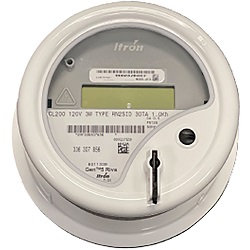
Robert Workman, an EMRS in Missouri, writes: “I have confirmed injuries from wireless radiation and the Smart meter seems to be the most damaging to me and my clients. Once the ITRON electronic meter is removed many of my clients have an immediate response to an improved health. This meter has been torture to myself and others in St Louis, it is my professional opinion this meter kills all biological life.”
Health practitioner Diane Peterson writes from California that “For the majority [of people], they suddenly developed symptoms and only later discovered that the symptoms began immediately after the smart meter was installed.”
Sema Kelly writes: “My friend’s neighbor had a smart meter put in. She didn’t know it had such dangers, but soon found out her chickens in the yard had huge tumors growing on their throats and body. The eggs they laid were odd shapes and colors, and the chickens appeared to be tired, which was not ever seen prior to the installments of the smart meters.”
Andre Fayollewrites that a smart meter gave his family headaches, caused the animals, birds and insects to disappear, and caused a fire that burned down his house.
Karen Crenshaw writes from California that she had no knowledge of the dangers of smart meters until an Itron smart meter was installed on her house, after which she awoke abruptly every hour during the night, had uncomfortable ear sensations, acquired high-pitched tinnitus, and felt pressure in her chest.
Annette Lillig writes from the UK: “Everyone I know who [has a smart meter] has been negatively affected by them.”
Beverly Jennings writes: “In Capitola, CA an entire bank of smart meters burst into flames and started a fire and burned down an apartment complex.”
Margaretha Tierney writes from Australia that she became sick two weeks after a smart meter was installed and was sick for five years until she had it moved off her house.
Sarah Wild writes that she had heart palpitations, headache, and panic until her smart meter was removed. She writes that her 80-year-old neighbor “went from being extremely lively, active, outward-going to hobbling around and forgetful within 6 months” of a smart meter being installed and died within 18 months.
Dino DeBenetti writes from Ontario, Canada that after a smart meter was installed, his wife’s health and behavior deteriorated, resulting in their divorce. He also writes that he has attempted to hatch fertile chicken eggs in an incubator in his house twice since the meter was installed, with over 20 fertile eggs each time, and not one egg hatched either time.
Karen Blomquist writes from California that when smart meters were installed on her home she incurred inner ear damage, sleeplessness, anxiety, non-stop heart palpitations, and migraines, and fled her home after two months to save her life. She also reports that her pets all got cancer and passed away.
Tina Cada writes from Florida that although she opted out of a smart meter on her own home, “[o]n the day they were getting installed [in her neighborhood], I walked outside and had no idea where I was. I had the worst kind of disorientation. This reaction was ongoing and lasted for the first few months.” She reports vertigo attacks that have continued, and constant dry mouth, that her teenage son has dry mouth, headaches and sleep disruptions, that her neighbor’s dog suddenly got cancer and died after the smart meters were installed, that her cat started acting differently, and that all the bats disappeared.
Laurie Grams writes from Texas that she lives in an apartment complex and so could not opt out, and has had sleep problems and agitation since smart meters were installed.
Jennifer Wood writes from West Virginia that “I have literally known thousands of people over the past nine years or so who became so ill when smart meters were installed in their homes that they had to move just as I did.”
Elizabeth Foley Walsh writes from North Carolina that she knew nothing about smart meters until after one was installed in her home and she began having severe headaches, dizziness, and temporal lobe seizures the following week. She writes that she thought she was dying until she went camping one week and the symptoms disappeared; that her next door neighbor’s headaches began the same time hers did; that an elderly neighbor across the street began falling repeatedly immediately after their headaches began; and that when she finally moved to a location without a smart meter she “was stunned at the change in my health.” She observed that “the frogs disappeared the very summer after the smart meter went in”—the hundreds of frogs that previously inhabited the creek behind their back yard—and that all the house sparrows and starlings disappeared, and that squirrels were “suddenly tame and suddenly laying down ‘resting’ a lot. They seem to be panting and they seem to be sick.” She writes that she has had to leave an 18-year career in developmental epidemiology.
Rainer Grobe writes that on the same day a smart water meter was installed, his wife developed heart arrhythmia, very high blood pressure, and fainted, and that they had to remove the meter themselves, with both legal and financial consequences.
Kent Casady writes from Germany that he and his wife purchased a house with a smart meter, and when they moved in there were no insects, bees, butterflies or birds, and “[t]he dirt in the yard was dead.” After they had the smart meter removed, they had “earthworms in the soil, bees, butterflies, hummingbirds, spiders, and other creatures.”
Kimberly Webber, in Taos, New Mexico, writes that although they were able to opt out of a smart meter at their home, they were unable to opt out at their place of business, and that “[w]e noticed agitation, irritability, depression, head aches, ear ringing and other symptoms from ourselves and our employees while in the work space.” They moved their business to a new location without a smart meter and “[a]ll of the symptoms have disappeared for us and our team.”
Ellen Habeck writes: “Until I researched the matter, I could not understand why I had such fragmented sleep, and would wake with severe tachycardia. I thought my heart would beat out of my chest. There was not sleep and no ability to function well in the morning after that.” Finally, “I looked and found the place I had moved to had a smart meter outside the bedroom wall.” She adds: “There is a neighbor who asked me why she thought she would feel unwell when working for hours in a particular room in her house. She also noted that any plants she put in that room died, where they had been thriving in other rooms. I looked and saw there was a smart meter directly on the other side of the wall of that room where she sat, and a neighbor’s smart meter pointing at fairly close proximity to that room.”
Arlene Griffin is a Santa Fe resident who briefly lived in southern California in 2019-2020. She writes: “I had no history of heart problems, but upon moving into a house in a development in San Diego County, I was jolted awake every night, feeling like what it would be like to be hit with defibrillator paddles. Once awake, my heart would alternate between pounding, racing, and skipping beats for the rest of the night, and I would shake for hours. I also developed eye issues—my eyes burned and were red and swollen. Each day I would feel better when I left our house, but each night the horrible symptoms would return. It was terrifying and exhausting… We hired an inspector who tested our house for RF/EMF radiation and found that the high readings were not coming from our property (we had an analog meter), but from our neighbor’s house. It so happened that her meter directly faced our bedrooms… Finally, in September 2020 I returned to New Mexico for good, and I have not had those heart symptoms here.”
Stephanie Dickerson writes from North Carolina that she is “currently suffering every single day and especially nights from the newly installed” smart meters in her neighborhood, and that “I have been forced from 3 previous home locations because of smartmeter installations… My heart rate has become dangerously high, my body temperature can not regulate, I experience constant vibrating in my torso and in my legs, my brain function has deteriorated and I can not sleep at all. This physical response to the newly installed smartmeters is life-threatening to me.”
Brenda Rogers writes from California that she “had to leave my home in a camper to find somewhere I could sleep” because of a smart meter, and that she had to abandon her home of 30 years.
Catherine Ralston lives in Taos. “A smart meter was put in at my address,” she writes. “I started having trouble sleeping at night. I started having headaches. I stopped waking up happy. My emotions were flatline. This happened quickly, over a couple of weeks. Someone told me about symptoms showing up in people after smart meters were installed where they live. I went looking for the smart meter. Then I moved my bed to a location in the building as far from the meter as I could put it, and slept with my head at the end of the bed furthest from the meter location. I slept through the night, and woke with no headache. I do not own the property and the owner won’t work with the electric company to give back the old meter. I feel blessed someone told me about the horrible impact the smart meters have on human health.”
Glenn Kikel moved to New Mexico from Colorado. He writes that when a smart meter was installed on their Colorado house, he developed tinnitus and his wife developed heart palpitations, and that both health problems ceased when the meter was moved.
Diane Craig writes that she “experienced severe tinnitus, tremors, short-term memory issues, and an area at the back of my neck at the base of my skull that was hot to my husband’s touch” in a 4-hour period after a smart meter was installed 10 feet beyond the head of her bed. They paid for opt-outs for both themselves and a neighbor in order to be well, she writes.
Alvita Armanavičienė, from Latvia, submitted this startling photograph of a bush standing just inches away from a smart meter:
Simone Bercu writes that she and her family left their homes in other states to come to New Mexico five years ago to escape smart meters. “The smart meters were devastating our small children and ourselves and the effects are still noticeable,” she writes.
Annie Mattingly, of Santa Fe, writes, “My daughter, living in another state, was away when a Smart Meter was installed on her house. Within days of her healthy arrival home, she became ill and now, several years later, she is still plagued with health issues and is only partially functional.”
M. L. writes from Pennsylvania: “When our meter started transmitting, I noticed two birds that had died within approximately 25 feet of it.”
Lukas Zillmer writes: “I have personal experience of bad sleep, waking up at night, waking up still tired from being exposed to the radiation by smart meters which made life almost unbearable.”
Simone Prince writes from British Columbia, Canada that her cat developed hyperthyroidism when a smart meter was installed on her townhouse, and that she herself changed from hypothyroidism to hyperthyroidism at the same time.
Communication towers inside Monteverde Cloud Forest Biological Preserve
AMPHIBIANS IN THE MINE
“Amphibians were here when the dinosaurs were here, and they survived the age of mammals. If they’re checking out now, I think it is significant.”
– David Wake, Director of the Museum of Vertebrate Zoology, University of California, Berkeley, 1990
They are ancient animals with abilities to survive beyond belief. They live both in water and on land. They can breathe through their skin. They can regenerate limbs and organs. They don’t get cancer. They have been around for 365 million years, and have survived four mass extinctions during the history of life on Earth. Yet today, they are disappearing more rapidly than any other class of animals. By their death, they are screaming: Turn off your cell phones! Now, before it is too late!
Even before cell phones, the proliferation of radio and TV towers, radar stations, and communication antennas in the 1960s, 1970s and 1980s began killing off these most hardy, well-adapted, and important forms of life.
The northern leopard frog, Rana pipiens – the North American green frog that croaked from every marsh, pond and creek when I was growing up — was already extremely rare by the end of the 1980s.
In the Colorado and Wyoming Rocky Mountains, boreal toads used to be so numerous that, in the words of Paul Corn of the United States Fish and Wildlife Service, “You had to kick them out of the way as you were walking down the trail.” By 1990 they were difficult to find at all.
Boreal chorus frogs on the shores of Lake Superior, once innumerable, were extremely rare by 1990.
In the 1970s David Wake could turn up eighty or more salamanders under the bark of a single log in a pine forest near Oaxaca, Mexico. In the early 1980s he returned and was able to find maybe one or two after searching the forest all day.
Until 1979 frogs were abundant and diverse at the University of São Paulo’s field station at Boracea, Brazil, according to Stanley Rand of the Smithsonian Tropical Research Institute. But when he returned in 1982, of thirty common frog species, six had disappeared entirely and seven had decreased in number drastically.
In 1974 Michael Tyler of Adelaide, Australia discovered a new frog species that brooded its young in its stomach. It lived in a 100-square-kilometer area in the Conondale Ranges, 60 kilometers north of Brisbane, and was so common that he could collect a hundred in a single night. By 1980 it was extinct.
The golden toad lived only in a 320-acre stunted forest in Costa Rica’s supposedly pristine, protected Monteverde Cloud Forest Preserve. In the early 1980s Marc Hayes of the University of Miami typically counted 500 to 700 males at one of the species’ breeding sites. After 1984 that site never had more than a dozen males. At another site Martha Crump observed a thousand males in 1987, but only one in 1988 and another single male frog in 1989. Today the species is extinct.
In 1990, when I began researching this magical class of vertebrates, there were not many amphibians left in all of Europe. Out of more than five thousand known species worldwide, about a dozen were doing well.
By the time I wrote Microwaving Our Planet in 1996, every species of frog and toad in Yosemite National Park had become scarce. Seventy-five species of the colorful harlequin frogs that once lived near streams in the tropics of the Western Hemisphere from Costa Rica to Bolivia had not been seen in a decade. Of the 50 species of frogs that once inhabited the Monteverde Cloud Forest Preserve, 20 were already extinct.
Similar population crashes were occurring in North, Central and South America, Europe, and Australia. Only in Africa and Asia, when I wrote that book, were amphibians doing well. That has since changed. On March 15, 2023, a team of 19 American scientists published a paper titled “Continent-wide recent emergence of a global pathogen in African amphibians.” Amphibians, say the authors, were doing fine on the dark continent until about the year 2000 — which coincidentally is when telecommunications companies began lighting up that continent with cell phone signals in earnest.
A couple of years earlier, in December 1997, I had published an article titled “The Informationization of the Third World.” I quoted President Clinton, who had lamented that “More than half the world’s people are a two days’ walk from a telephone.” I highlighted Bangladesh, where there were plans to bring cell phones to 40,000 of the country’s 68,000 villages over the next four years. In Africa, where several countries still had less than one conventional phone per one thousand people, some two dozen countries were introducing cellular systems. The debate, in the world’s press, was about what this would do to the traditional village, and whether this was a desirable thing from a cultural point of view. I took a broader view:
“An even more important question is what will happen to nature? Can nature survive at all in a distanceless world? I think the answer, if ecologists and environmentalists brought their knowledge to bear, would be a resounding no. Biodiversity depends on distance. What is not often acknowledged is that cultural diversity also depends on distance, and that culture is nature-based. Local dialects, and local handicrafts, and local dress, and local economies, and local varieties of crops, and local varieties of plants and animals — i.e. local ecosystems — depend on the village’s being a two days’ walk from a telephone. The most basic reason for the disappearance of species is that very few of them can withstand the global exploitation that must come when there is instantaneous transportation and communication.”
And then there is the radiation. The effects of microwave radiation in Africa, as cell towers began serving larger numbers of its residents, are now apparent: amphibians have been disappearing all over the continent. This has been blamed on a type of fungus called Batrachochytrium dendrobatidis (Bd), rare in Africa prior to the year 2000. But whether it is the fungus that is killing frogs, toads and salamanders, or whether it is the radiation that is killing them, and that is allowing a fungus to grow in their devitalized bodies, is a question no one is asking. For example, why, in Cameroon, where 83 percent of the population own mobile phones, and four cell phone providers cover a lot of the country, is the fungus found in 17 percent of all amphibians collected — while in neighboring Equatorial Guinea, where only 40 percent of the population own mobile phones and there are no cell towers except in the coastal city of Bata, there is zero fungus? Why, in South Africa, where 90 percent of the population own mobile phones, and coverage is good in most of the country, is the fungus found in 23 percent of amphibians collected — while in neighboring Mozambique, where only 43 percent of the population has a mobile phone, zero fungus has been found among the amphibians collected? Could it be because cell phones are still useless in much of northern Mozambique, and that is where all the amphibians in that country have been collected: Mount Mabu, Mount Namuli, Mount Ribáuè, and Balama?
Most of the suggested explanations for the global die-off make little sense. Climate change is being widely blamed, yet scientists looking for an association of population crashes with temperature or other weather factors have found none. Why, worldwide, are amphibians declining faster at high altitudes than at lower elevations where the climate is warmer? Could it be because the higher elevations receive more radiation, and because many antennas are found on mountains? Scientists have found no evidence that fish or non-native amphibians have caused native amphibians to go extinct. Land use change does not explain sudden population crashes in pristine protected areas. Pesticide use does not correlate with the population declines.
These inconsistencies seem to be escaping the scientists who are looking for answers. They are escaping them because they have a terrific blind spot: they do not see the radiation at all, it does not exist for them.
The single most rapid and catastrophic crash in amphibian populations occurred in the year 1988 in the Monteverde Cloud Forest Biological Preserve in Costa Rica, a location that has long puzzled scientists because it is strictly protected and supposedly untouched and pristine. This is what I thought as well until I began to do research for this article. I just found out, to my astonishment, that right in the middle of this two-square-mile preserve, on top of a hill called Cerro Amigos (“Friends Hill”), is an antenna farm called Las Torres (“The Towers”). A photo of the top of that hill is at the top of this article. As of 2012, there were 17 radio, TV, cell phone, and other types of communication towers on that hill, a few of them dating from the 1970s and 1980s. I am making inquiries to try to pin down what was added in 1988. If you live in Costa Rica and know some of this history, please contact me.
More Connected Means More Vulnerable
“Is It a Hazard to Be Healthy?” asked Dr. D. B. Armstrong in the Boston Medical and Surgical Journal in 1918. If you were undernourished, physically handicapped, anemic, or tuberculous, you were much less likely to get influenza and much less likely to die from it if you did. The vast majority of people who died from the Spanish influenza were pregnant women and healthy young adults. Doctors were seriously discussing whether they were actually giving their patients a death sentence by advising them to keep fit!
Amphibians are dying for the same reason. What is completely neglected in the sciences of biology, medicine and ecology, is our electrical connection to earth and sky. As I discuss in chapter 9 of my book, The Invisible Rainbow, we are all part of the global electrical circuit that courses through the sky above us, flows down to earth on atmospheric ions and raindrops, enters the tops of our heads into our bodies, flows through our meridians, exits into the earth through the soles of our feet, travels along the surface of the earth, and flows back up to the sky on lightning bolts during thunderstorms. Those of us who are most vital and have the strongest connection to earth and sky — healthy, vigorous young adults and pregnant women — died in the largest numbers in the 1918 flu, which was caused not by a virus but by the use of enormously powerful VLF radio stations by the United States when it entered the First World War. The same thing happened in 1889 (introduction of AC electricity), 1957 (first construction of civil defense radars), and 1968 (first constellation of military satellites).
“In each case—in 1889, 1918, 1957, and 1968—the electrical envelope of the earth, to which we are all attached by invisible strings, was suddenly and profoundly disturbed. Those for whom this attachment was strongest, whose roots were most vital, whose life’s rhythms were tuned most closely to the accustomed pulsations of our planet — in other words, vigorous, healthy young adults, and pregnant women — those were the individuals who most suffered and died. Like an orchestra whose conductor has suddenly gone mad, their organs, their living instruments, no longer knew how to play.”
Salamanders, toads and frogs have more vitality than other forms of life. The density of their strings — their meridians — that connect them to earth and sky is greater. It is why they rarely (and salamanders never) get cancer: both their external and internal communication systems are too strong for their cells to escape control. It is why frogs can partially regenerate lost limbs, and salamanders can regenerate them completely. It is why salamanders can even regenerate their heart — and do it within hours — if half of it is cut out — an astounding fact discovered by Dr. Robert O. Becker and written about in chapter 10 of his classic book, The Body Electric.
It is also why amphibians are dying out. Animals with such a strong connection to Earth’s orchestra — who are so attuned to it that they have survived for 365 million years — cannot withstand the chaos that we have superimposed on it during the past half century and more — the chaos that we have injected into the living circuitry with our radio and TV stations, our radar facilities, our cell phones and cell towers, and our satellites.
It is why, in 1996, when parades of cell towers were marching from coast to coast in the United States, and sprouting at tourist destinations, mutant frogs were turning up by the thousands in pristine lakes, streams and forests in at least 32 states. Their deformed legs, extra legs, missing legs, missing eyes, misplaced eyes, misshapen tails, and whole body deformities frightened school children out on field trips.
It is why developing frog embryos and tadpoles exposed by researchers in Moscow in the late 1990s to a (wired) personal computer developed severe malformations including anencephaly (absence of a brain), absence of a heart, lack of limbs, and other deformities that are incompatible with life.
It is why, when tadpoles were kept for two months in a tank on an apartment’s terrace in Valladolid, Spain, 140 meters from a cell tower, 90 percent of them died, versus only 4 percent mortality in an identical tank that was shielded from radio waves.
It is why wireless technology, which has placed a source of lethal radiation into the hands of almost every man, woman and child on earth, is such an emergency and must come rapidly to an end if we are so save our planet and the millions of other species who are still trying to share it with us. The frogs and salamanders are telling us that it is not a matter of choice, and it is not a matter of how far from our heads we hold our phones. It is a matter of their survival and ours.
Selected Bibliography
Balmori, Alfonso. The incidence of electromagnetic pollution on the amphibian decline: Is this an important piece of the puzzle? Toxicological & Environmental Chemistry 88(2): 287-299 (2006).
Balmori, Alfonso. Mobile phone mast effects on common frog (Rana temporaria) tadpole: The city turned into a laboratory. Electromagnetic Biology and Medicine 29: 31-35 (2010).
Becker, Robert O. and Gary Selden. The Body Electric (NY: William Morrow 1985).
Berger, Lee, Rick Speare, Peter Daszak, et al. Chytridiomycosis causes amphibian mortality associated with population declines in the rain forests of Australia and Central America. Proceedings of the National Academy of Sciences 95: 9-31-9036 (1998).
Berger, Lee, Alexandra A. Roberts, Jamie Voyles, et al. History and recent progress on chytridiomycosis in amphibians. Fungal Ecology 19: 89-99 (2016).
Bittek, Jason. Half of all amphibian species at risk of extinction. National Geographic, May 8, 2019.
Blaustein, Andrew R. and Pieter TJ Johnson. The complexity of deformed amphibians. Frontiers in Ecology and the Environment 1(2): 87-94 (2003).
Collins, James P. Amphibian decline and extinction: What we know and what we need to learn. Diseases of Aquatic Organisms 92: 93-99 (2010).
Drost, Charles A. and Gary M. Fellers. Collapse of a regional frog fauna in the Yosemite area of the California Sierra Nevada, USA. Conservation Biology 10(2): 414-425 (1996).
Firstenberg, Arthur. The Informationization of the Third World. No Place To Hide 1(3): 1-2 (Dec. 1997).
Firstenberg, Arthur. Microwaving Our Planet: The Environmental Impact of the Wireless Revolution (NY: Cellular Phone Task Force 1996, 1997).
Firstenberg, Arthur. The Invisible Rainbow: A History of Electricity and Life (White River Junction, VT: Chelsea Green 2020, 560 pages).
Ghose, Sonia L., Tiffany A. Yap, Allison Q. Byrne, et al. Continent-wide recent emergence of a global pathogen in African amphibians. Frontiers in Conservation Science 4: 1069490 (2023).
González-del-Pliego, Pamela, Robert P. Freckleton, David P. Edwards, et al. Phylogenetic and trait-based prediction of extinction risk for data-deficient amphibians. Current Biology 29: 1557-1563 (2019).
Hoperskaya, O.A., L.A. Belkova, M.E. Bogdanov, and S.G. Denisov. The action of the “Gamma-7N” device on biological objects exposed to radiation from personal computers. In Electromagnetic Fields and Human Health: Proceedings of the Second International Conference, Moscow, Sept. 20-24, 1999, pp. 354-355, Abstract.
Houlahan, Jeff E., C. Scott Findlay et al. Quantitative evidence for global amphibian population declines. Nature 404: 752-755 (2000).
Laurance, William F. Global warming and amphibian extinctions in eastern Australia. Australian Ecology 33: 1-9 (2008).
Lips, Karen R., Patricia A. Burrowes, Joseph R. Mendelson III, and Gabriela Parra-Olea. Amphibian declines in Latin America: Widespread population declines, extinctions, and impacts. Biotropica 37(2): 163-165 (2005).
McCallum, Malcolm L. Amphibian decline or extinction? Current declines dwarf background extinction rate. Journal of Herpetology 41(3): 483-491 (2007).
Norris, Scott. Ghosts in our midst: Coming to terms with amphibian extinctions. BioScience 57(4): 311-316 (2007).
Pound, J. Alan and Martha I. Crump. Amphibian declines and climate disturbance: The case of the golden toad and the harlequin frog. Conservation Biology 8(1): 72-85 (1994).
Rose, S. Meryl. Regeneration (NY: Appleton-Century-Crofts 1970).
Souder, William. An amphibian horror story. New York Newsday, Oct. 15, 1996, p. B19+.
Souder, William. Deformed frogs show rift among scientists. Houston Chronicle, Nov. 5, 1997, p. 4A.
Stuart, Simon N., Janice S. Chanson, Neil A. Cox, et al. Status and trends of amphibian declines and extinctions worldwide. Sciencexpress, October 14, 2004 (5 pages).
Toledo, Luís Felipe, Sergio Potsch de Carvalho-e-Silva, Ana Maria Paulino Telles de Carvalho-e-Silva, et al. A retrospective overview of amphibian declines in Brazil’s Atlantic forest. Biological Conservation 277: 109845 (2023).
Vogt, Amanda. Mutant frogs spark a mega mystery scientists worry could be an early warning of environmental danger. Chicago Tribune, August 4, 1998, sec. 4, p. 3.
Vredenburg, Vance T., Ronald A. Knapp, Tate S. Tunstaff and Cheryl J. Briggs. Dynamics of an emerging disease drive large-scale amphibian population extinctions. Proceedings of the National Academy of Sciences 107(21): 9689-9694 (2010).
Wake, David B. and Vance T. Vredenburg. Are we in the midst of the sixth mass extinction? A view from the world of amphibians. Proceedings of the National Academy of Sciences 105(Suppl. 1): 11466-11473 (2008).
Watson, Traci. Frogs falling silent across USA. USA Today, August 12, 1998, p. 3A.
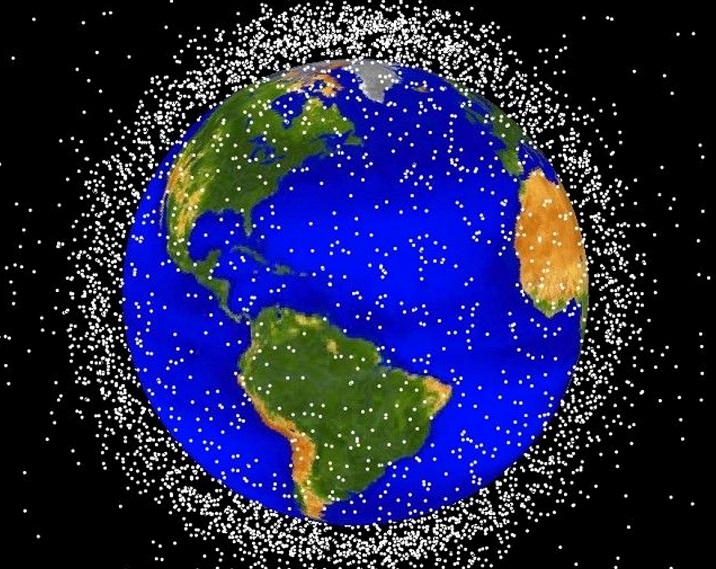
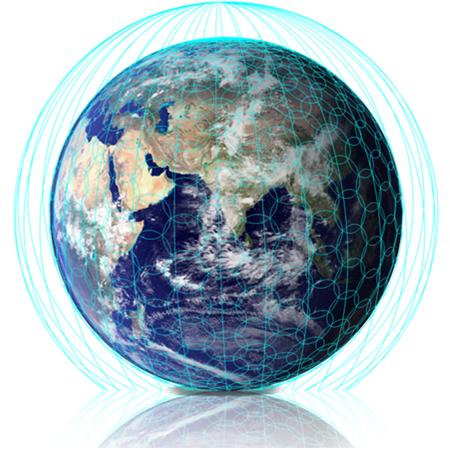
On the evening of Thursday, December 8, 2022, OneWeb launched 40 satellites from Cape Canaveral, Florida, bringing the total number of active satellites in orbit around the Earth to more than 7,000. These cell towers in space are altering the electromagnetic environment of the entire planet and are debilitating and exterminating all life on it.
Even the first fleet of 28 military satellites launched by the United States caused a worldwide pandemic of influenza when they became operational on June 13, 1968. The Hong Kong flu began in June 1968, lasted through April 1970, and killed up to four million people worldwide. To understand why requires a proper understanding of our connection to the universe and what it is that really gives us life and health, and makes our bodies move. In a sense, we are all puppets on invisible strings that connect us to heaven and earth, strings that resonate at the age-old frequencies of the biosphere in which we live, the space between Earth and Sky, whose dimensions never change. And when we modulate and pulsate those strings at random from thousands of locations in space, we change the beautiful music of the earthly orchestra into a discordant chaos that scatters bodies all over the world, helpless before it.
On March 24-25, 2021, the chaos was brought to a new level, that the world now accepts as normal. In that 24-hour period, a record 96 satellites were launched into space on a single day—60 by SpaceX and 36 by OneWeb—and on the same day SpaceX dramatically increased the speed of its satellite internet connections. On that day, people all over the world suddenly could not sleep, were weak and exhausted, had muscle spasms, and hurt and itched all over, especially in their feet and legs. They had skin rashes, were dizzy and nauseous, and had stomach aches and diarrhea. The ringing in their ears was suddenly amplified. Their eyes were inflamed, and their vision suddenly worsened. They had heart arrhythmias, and their blood pressure went out of control. Some had nosebleeds, or coughed up blood. They were anxious, depressed or suicidal, and irritable. Their cats, dogs, chickens, goats and cows were sick at the same time.
My newsletter of April 15, 2021, Survey Results, quoted from some of the thousand letters I received from people young and old, from people who called themselves electrosensitive and from people who did not, from people who had no wireless technology and from people who had smart meters and 5G antennas outside their homes and who emailed me from their cell phones, all reporting the same experiences, commonly reporting that not only they, but their spouse, children, parents, neighbors, friends, coworkers, clients, and everyone else they knew were sick, exhausted and irritable on March 24 or 25 and had trouble sleeping. The reports came from 42 states and 50 countries.
Deaths of blue titmice spiked in Germany beginning on March 25, 2021. March 25 registered the second highest number of COVID-19 deaths in 2021, and the fifth highest since the pandemic began. The number of mass shootings in the US rose suddenly on March 25 and remained high for three weeks. An average of 6 shootings involving 4 or more victims occurred every day between March 25 and April 13. Photographs of hundreds of worms, and of hundreds of sheep, moving silently in perfect spirals, were taken on March 25 and March 26.
Long-term pain, sickness, and debility has become so common that it is now accepted as a normal part of life that the world thinks it can address with endless vaccinations, mask-wearing, and the wiping of all hands and surfaces with toxic disinfectants.
Last week, on December 8, 2022, on the day OneWeb launched satellites that will expand its coverage across the US, Europe, the Middle East and Asia, I experienced within my body, and heard from some other people both locally and far away that the pains and debilities from which we have been suffering at some level for the past 20 months suddenly intensified. I was almost crippled for three days. As on March 24-25, 2021, I would like to find out how widespread this is. Please reply to this email if you have experienced something similar.
Although SpaceX and OneWeb are (so far) building the largest fleets of Earth-destroying satellites, they are far from the only entities launching them. The 7,000 satellites presently operating were launched by governments or private companies of the following countries:
Algeria, Argentina, Australia, Austria, Azerbaijan, Bangladesh, Belarus, Belgium, Bolivia, Brazil, Bulgaria, Canada, Chile, China, Colombia, Czech Republic, Denmark, Ecuador, Egypt, European Space Agency, Estonia, Ethiopia, Finland, France, Germany, Greece, Hungary, India, Indonesia, Iran, Iraq, Israel, Italy, Japan, Jordan, Kazakhstan, Kuwait, Laos, Lithuania, Luxembourg, Malaysia, Mexico, Monaco, Morocco, Multinational, Nepal, Netherlands, New Zealand, Norway, Pakistan, Paraguay, Peru, Poland, Qatar, Russia, Saudi Arabia, Singapore, Slovenia, South Africa, South Korea, Spain, Sri Lanka, Sudan, Sweden, Switzerland, Taiwan, Thailand, Tunisia, Turkey, Turkmenistan, Ukraine, United Arab Emirates, United Kingdom, United States, Uruguay, Venezuela, Vietnam
And they were launched from the following spaceports:
Baikonur Cosmodrome (Kazakhstan) Cape Canaveral (Florida, USA) Dombarovsky Air Base (Russia) Guiana Space Center (French Guiana) Jiuquan Satellite Launch Center (Inner Mongolia, China) Kodiak Launch Complex (Alaska, USA) Kwajalein Island (Marshall Islands) Naro Space Center (South Korea) Pacific Ocean (from Odyssey Sea Launch vessel) Palmachim Launch Complex (Israel) Plesetsk Cosmodrome (Russia) Rocket Lab Launch Complex 1 (New Zealand) Satish Dhawan Space Centre (India) Shahroud Missile Range (Iran) Svobodny Cosmodrome (Russia) Taiyuan Launch Center (China) Tanegashima Space Center (Japan) Uchinoura Space Center (Japan) Vandenberg Air Force Base (California, USA) Vostochny Cosmodrome (Russia) Wallops Island Flight Facility (Virginia, USA) Wenchang Satellite Launch Center (China) Xichang Satellite Launch Center (China) Yellow Sea (from a mobile sea platform)
Other Satellite News
European IRIS Satellites
The European Union just got into the act with its own program to provide high-speed broadband from space to all of Europe and Africa. On December 5, 2022, the Council of the EU and the European Parliament reached a provisional agreement to launch 170 new satellites called Infrastructure for Resilience, Interconnection and Security (IRIS). “This new component of the EU Space Programme will put an end to dead zones in Europe as well as the whole of Africa using the constellation’s North-South orbits through a resilient and ultra-secure space and ground-based system,” says the EU’s Space Program (EUSPA) website.
AST SpaceMobile
On September 10, 2022, AST SpaceMobile launched the largest, and probably the most powerful, commercial communications array ever put into space. It is the first of a planned fleet of 243 Bluebird satellites designed to connect directly with people’s existing mobile phones, no matter where on Earth they may be located. The size of its solar array — 64 square meters — is causing alarm among astronomers because it is as bright as the brightest stars during the hours after sunset and before sunrise.
So far AST SpaceMobile is working with Rakuten Mobile, AT&T, Bell Canada, Telecom Argentina, Africell, Liberty Latin America and Orange, for a potential customer base of 1.8 billion mobile phone subscribers.
The immensely powerful signals from the Bluebird satellites are also worrying radio astronomers, as well as human beings who are concerned for their well-being. The effective radiated power of each satellite, according to AST’s filings with the FCC, will be up to 83 million watts, and the exposure level at the surface of the earth from such beams, according to my calculations, will be up to 3 nanowatts per square centimeter, which is 100 times more radiation than what I am exposed to in my house in Santa Fe from the nearest cell towers.
“Every person should have the right to access cellular broadband, regardless of where they live or work. Our goal is to close the connectivity gaps that negatively impact billions of lives around the world,” said Abel Avellan, CEO of AST SpaceMobile.
We beg to differ, Mr. Avellan. Every person, every animal, and every plant should have the right to drink from the Earth’s natural frequencies, and not to be bombarded with artificial radiation from space.
Donations to support this work are needed. The Cellular Phone Task Force is a 501(c)(3) nonprofit organization, and donations from U.S. residents are tax-deductible. Our Tax ID Number is 11-3394550.
“The sky is falling! The sky is falling!” cried Chicken Little. And the sky fell, and no one listened, and all was still.
A scholarly literature search for “electromagnetic” + “biological effects” produces the astonishing number of 76,400 studies, more studies than for most other environmental threats, yet the world continues on, looking yet blind, listening yet deaf, mistaking silence for comfort, the advancing flames for a bright future.
On the Dutch island of Texel, being the south end of a line of islands separating the Wadden Sea from the North Sea, a large breeding colony of seabirds called Sandwich terns (“great terns” in Dutch) made headline news last month by dying. Of the 7,000 birds nesting in the De Petten nature reserve until the end of May, none were left by the middle of June. 3,000 avian corpses were collected, and the rest either died or abandoned their nests.
The correspondent who sent me this news, Antonia in the Netherlands, also sent me to a Dutch website that monitors all cell towers and antennas throughout the country. The tern catastrophe was being blamed on “bird flu” and she suspected something else might be going on. When I looked at the website I was floored. The first 35 dead terns at De Petten were found on May 29, 2022. There are three cell towers on the edge of the reserve, and actually in the territory which the terns inhabit. According to the website, 18 new 4G antennas had just been added to those towers – 6 by Vodafone to its 83-foot tower on May 25, 2022, and 12 by KPN to its 108-foot tower on May 29, 2022. The number of frequencies emitted by those two towers had increased overnight from 5 to 11.
In addition to having all those antennas right at the reserve, De Petten is located on the northern edge of a waterway that separates the North Sea from the Wadden Sea, and a large number of antennas on both sides of that waterway — the antennas in Den Helder to the south and the antennas on Texel to the north — are aimed at that busy waterway, which is intensely used by the ships that continually pass through it. Consequently, according to my research, there are a total of 105 4G antennas within 7 miles of De Petten that are aimed directly at it.
Were Texel’s Sandwich terns already in bad shape from all the radiation they had been exposed to in the last few years? And did the sudden increase in both the number of antennas and the number of frequencies finally kill them?
I decided to investigate further. What I have discovered, both in the Netherlands and elsewhere, is consistent but not simple. Here are some rough rules:
(a) A sudden dramatic increase in the number of antennas and frequencies whose source is within a breeding colony or on its border is lethal. Nesting birds cannot avoid the radiation; they must either abandon their nests or die.
(b) The effect of antennas aimed at a breeding colony from a distance depends on the human population. In a sparsely populated region, the antennas emit little radiation and few frequencies because few people are using them. By contrast, cell towers located in major ports are heavily used, both by residents and ships, and emit maximal radiation. The same is true of antennas aimed at heavily used shipping lanes.
(c) Distance does not matter as much as terrain and tower height. The radiation from a taller tower travels further. And when there is nothing but water between the tower and the bird colony, the water reflects and amplifies the signal and distance matters very little.
(d) 4G towers are generally worse than 5G towers. This is because 4G towers broadcast their radiation in all directions while 5G towers emit most of their radiation in focused beams, aimed directly at people holding 5G phones in their hands.
With these rules in mind, let us look at a few other breeding colonies of Sandwich terns and see what has happened to them this year:
Another large breeding colony of Sandwich terns made headlines a bit later, and for the same reason: the one at Waterdunen, at the opposite end of the Netherlands, in Zeeland province. Like De Petten, the Waterdunen nature reserve is located on a busy shipping lane at the entrance to a busy port. The largest colony of these birds in the Netherlands, Waterdunen hosted 7,000 pairs of terns that flew up from Africa to breed there this spring. But on June 24, 2022, it was reported that 4,600 dead adult and young Sandwich terns had been collected there during the previous two weeks. By the end of June, this colony no longer existed either.
The nature reserve at Waterdunen has 318 heavily-used 4G antennas aimed in its direction from distances of from 0.5 to 8 miles. Most of these emit between 1,000 and 2,000 watts of radiation each. 46 of these antennas are new, having been added to existing towers in April, May and June 2022. One 55-foot tower less than 2 miles down the beach from Waterdunen was upgraded on May 18, 2022 from 6 antennas to 12 and from 2 frequencies to 4. Another, 40-foot tower in the same location was upgraded on June 22, 2022 from 6 antennas to 18 and from 2 frequencies to 6. As Sandwich terns live on fish, those towers are within the foraging area for that colony.
Did the same thing happen to all nesting Sandwich terns in the Netherlands? No. Just 20 miles from Waterdunen was a small, healthy colony of terns at a nature reserve called Yerseke Moer. And from April to July, i.e. throughout the 2022 nesting season, this colony thrived and no dead birds were found there. Unlike De Petten and Waterdunen, this reserve is located in a relatively isolated place, is not near a major port and is not on a shipping lane. A total of 35 4G antennas are aimed at this reserve from distances of up to 8 miles. Only two of those antennas have been added since April.
Likewise in France, two very large colonies of terns had two completely different experiences. At the Platier d’Oye nature reserve near the port of Calais, a colony of 3,000 Sandwich terns began nesting in April. The first 100 dead birds were discovered on May 20, and within a few weeks the colony was almost completely wiped out.
The situation at Platier d’Oye is similar to that further north in Texel: dozens of new 4G and 5G antennas were added near the reserve during the months of May and June. 3 new 4G antennas and 6 new 5G antennas were added to an existing 90-foot cell tower bordering the reserve. Another 6 new 4G antennas and 6 new 5G antennas were added to an existing 140-foot tower about two miles to the southeast. Another 6 new 4G antennas and 6 new 5G antennas were added to an existing 95-foot tower about two miles to the east. At this writing there are the astounding number of 355 antennas of all kinds on 26 towers at 13 locations ranging from 10 feet tall to 255 feet tall within about 4 miles of this nature reserve.
An even larger colony — the largest breeding colony of Sandwich terns in France — had nodisease during the 2022 breeding season. It is called the Polder de Sébastopol and was host to several thousand pairs of nesting birds. But like Yerseke Moer, it is on an isolated island with few human residents. The island’s land area is largely devoted to parks, nature reserves and visitor accommodations. None of the antennas on the two cell towers a half mile west of the Polder are aimed at it. And even though there are a large number of antennas between one and four miles away that are aimed directly at the Polder, no ships pass by offshore and those antennas are little used except by visitors to the reserve walking its trails.
Looking at the details and different experiences at particular breeding colonies of these birds, the official story breaks down. How can one make sense of the extermination of so many of these birds in a matter of a few weeks in such widely scattered places? According to the bird conservation organizations, bird flu is so contagious that it spreads among Sandwich terns all over Europe in a matter of days, yet it is so non-contagious that a small colony of terns 20 miles away escapes scot-free. Bird flu travels from one end of the Netherlands to the other in a few days, but not between two Dutch colonies 20 miles apart, and not between the two largest colonies in France?
Apparently the conservation organizations also do not think it strange that suddenly and for the first time ever, in 2022, bird flu is (a) killing Sandwich terns and (b) is occurring during their breeding season. In decades of monitoring them, bird flu has never affected Sandwich terns before anywhere in the world. And it has always been a seasonal disease, occurring only in autumn and winter, and has never before affected any types of wild birds in spring and summer until 2022. It has also never affected so many different kinds of wild birds at once – terns, seagulls, avocets, gannets, skuas, guillemots, puffins, oystercatchers, ducks, geese, godwits, pheasants, magpies, sanderlings, storks, cranes, pelicans, herons, swans, loons, sparrows, pigeons, red-winged blackbirds, owls, cormorants, grebes, dunlins, crows, ravens, bald eagles, hawks, falcons, vultures. Both the bird organizations and the authorities are reacting reflexively by wearing masks and hazmat suits when they visit these colonies and handle dead birds. But they should begin questioning the cause of such an unprecedented catastrophe.
There is no doubt that sick birds have tested positive for a virus called H5N1. But when every testing laboratory is constantly amplifying fragments of that virus in untold numbers of PCR tests, one has to suspect that the walls, floors, air, equipment, and personnel in the testing laboratories are contaminated with this virus. When one remembers that samples from a goat, a quail and a papaya, sent to the National Health Laboratory of Tanzania, all came back positive for COVID-19, the results of PCR tests, whether for people, birds, or fruit, should be regarded with caution. Yes, both birds and people are getting sick and dying, but there is another obvious factor that is being ignored. The tendency to blame all illness on microorganisms is destroying our world.
It is the uncontrolled irradiation of our world that is killing us and wiping out all the birds. Both 4G and 5G antennas are being erected more quickly and in greater numbers than ever before, not only on land but even on the surface of the sea. Wherever there are offshore wind farms, the cell phone companies are placing cell towers on those platforms. Seabirds will soon not only have no place to lay their eggs and raise their young, but they will not even be able to hunt for their food and feed their young without being irradiated. The largest company building cell towers on the surface of the sea is called Tampnet. Here is a map of all their towers and their coverage areas in the North Sea and the Gulf of Mexico: https://www.tampnet.com/coverage-maps
In 1918, at the very height of the Spanish influenza, attempts by medical teams in Boston and San Francisco to demonstrate the contagious nature of the flu met with complete and resounding failure. They collected mucous secretions from the mouths, noses, throats, and bronchi of sick flu patients in various stages of the disease and transferred these secretions to the noses, throats, and eyes of hundreds of healthy volunteers. They injected blood from sick flu patients into healthy volunteers. The had healthy volunteers sit nose to nose with severely ill flu patients while they spoke to each other and then the patient coughed five times directly in the face of the volunteer. None of the volunteers got sick in any way. These experiments were published in the Journal of the American Medical Association, the Boston Medical and Surgical Journal, and Public Health Reports.
Horses also came down with influenza, and similar failure attended attempts to transfer influenza from one horse to another. As a result of these experiments, Lieutenant Colonel Herbert Watkins-Pitchford wrote that he could find no evidence that influenza was ever spread directly from one horse to another.
Many are the scientists, over the years, who have observed that influenza, whether in humans, horses, birds, or pigs, is an exceedingly strange disease. No one has ever explained why the flu is seasonal, for example. Or why flu epidemics end. Or why out-of-season epidemics do not spread. Or why flu epidemics explode over whole countries at once, and disappear just as miraculously, as if suddenly prohibited. Or how human influenza can spread around the world in days, and has always done so, even centuries ago when neither airplanes, automobiles, railroads, nor steamships existed. At least 23 scientists over the years, including Richard Shope, the scientist who first identified the flu virus in 1931, have published papers questioning the contagious nature of the flu and/or suggesting an electrical cause for it.
Chapters 7, 8 and 9 of my critically important book, The Invisible Rainbow: A History of Electricity and Life, are devoted to a complete, detailed examination of the history and science of influenza. Chapter 16, the longest chapter in the book, is devoted in part to the effects of electromagnetic radiation on birds. I suggest that all bird conservation organizations should acquire my book and read it carefully.
The last 44 newsletters, including this one, are available for viewing and sharing on the Newsletters pageof the Cellular Phone Task Force. Some of the newsletters are also available there in German, Spanish, Italian, French, Norwegian, and Dutch.
Number of planned low-orbit satellites NOW EXCEEDS ONE MILLION
On Sunday, SpaceXlaunched 23 satellites from Cape Canaveral in the morning, and 22 more from Vandenberg Air Force Base in the evening. This brought the total number of operating satellites irradiating the Earth to about 8,800.
SpaceX has been sending up satellite-laden rockets every few days this year, in its haste to satisfy an insatiable demand for bandwidth by the billions of human beings who use cell phones. But SpaceX is not the only one. Hundreds of companies are competing for a share of the global market to supply Internet from the sky to the world’s population.
On January 5, 2022, I sent out a newsletter listing 147 companies and government agencies from 34 countries that were operating, launching, or planning fleets of satellites that, if they were all launched, would total about half a million in our skies, far outnumbering the visible stars. On October 17, 2023, the journal Science, reviewing filings with the International Telecommunication Union, informed the world that the number of filings and the number of planned satellites have again more than doubled. There are more than 90 filings for constellations of over 1,000 satellites each. Twenty-three have over 5,000 satellites, and eight have over 10,000 satellites. As of December 31, 2022, the number of satellites being planned by 300 companies and governments exceeded one million. And in June, 2023, E-Space, a company based in France and founded by Greg Wyler in 2022, filed a plan for a single megaconstellation containing 116,640 satellites. E-Space had previously filed a plan, via the government of Rwanda, for an even larger constellation containing 327,320 satellites. Two days after his new filing with the ITU, Wyler clarified that “Our filing in France is in addition to our filings in Rwanda.”
Our new network, People Without Cell Phones, is more important than ever. The only way to diminish the demand for bandwidth that is turning the Earth into a giant computer, with all living beings electrocuted inside of it, is to stop using cell phones. Not to use them less frequently, but to throw them away. The ability to use them, no matter how infrequently, requires the entire planet to be irradiated. Please join our network by forming a local chapter where you live. You can set your own rules, but it is important to have meetings in person. Please contact me if you need help and let me know that you are doing it. Our goal is to establish an expanding global presence of communities that do not use cell phones. It is up to us.
This newsletter is also available for viewing and sharing as a PDF, and on Substack. This newsletter and the last 62 newsletters are available on the Newsletters pageof the Cellular Phone Task Force, both in English and other languages.
This work and these newsletters are supported entirely by donations from individuals. We have no other source of funding. The Cellular Phone Task Force is a 501(c)(3) nonprofit organization and donations by U.S. residents are tax-deductible. Our Tax ID Number is 11-3394550.
Imagine a world in which everyone was convinced to point a musical gun at their head, which shot a continuous stream of tiny bullets, so small that they caused no pain. But every bullet destroyed brain cells on its way through the skull. Imagine millions of gun towers strafing the surface of the earth 24/7 with similar bullets, entertaining the people while destroying all life.
And all the plants and animals were sickening and dying, and the humans were sick and having strokes and heart attacks, but because the bullets were so tiny, few people realized why. Plant biologists blamed the decline on acid rain. Ornithologists blamed influenza. Entomologists blamed climate change and pesticides. The medical profession blamed diet and lack of exercise, and an ever-expanding list of bacteria and viruses.
And here and there, a very few people were screaming, STOP! THROW AWAY YOUR GUNS! TAKE DOWN THE GUN TOWERS! DISABLE THE SATELLITES THAT ARE STRAFING THE EARTH! But because everyone was busy listening to the music, they paid no attention. And the people screaming, who were also sick and having strokes and heart attacks, went to their doctors who, instead of sounding a worldwide alarm, told their patients “You must be gun sensitive” and gave them tranquilizers and antidepressants so they would go away and stop screaming.
And so these people concluded there must be something wrong with them. They formed support groups for people with gun sensitivity, and asked the rest of the world to please take pity on them and stop shooting them. And when there was no place left in the world that was not being strafed, they pleaded with their governments to please establish refuges where they could live out their lives free from bullets. But no one took them seriously.
______________
That is the world we live in today.
“Electromagnetic hypersensitivity” (EHS) is a term that allows doctors to pretend that electricity is harmless, and that radiation does not injure their patients. It allows people who have discovered they can feel electricity and radiation to pretend that there is something wrong with them and that everyone else does not feel it. It allows environmentalists to pretend that the vanishing of birds and wildlife and the collapse of the Earth’s life support systems are due to something else. And it allows people who use cell phones to pretend they do not feel the radiation and that their insomnia, headaches, joint pains, digestive problems, panic attacks, memory loss, tinnitus, nosebleeds, high blood pressure, heart failure, neurological problems, and diabetes are caused by something else.
It is late autumn here in Santa Fe.
And it is late autumn in the life of the Earth. We must prevent winter from coming, for there will be no spring if it does. It is up to all of us.
My new book, The Earth and I, can be ordered now and will be mailed January 7. This is a groundbreaking book about the real causes of the environmental crisis that I wrote in the early 1990s and updated during the past year. It is the first book to paint human beings as part of nature and not rulers over it, and as controlled by technology, rather than controllers of technology.
LAST CHANCE ON SMART METERS
We have hired a lawyer, Helen Bennett, to take us to the New Mexico Supreme Court. Here in New Mexico, we still have a chance to shine a light on the global destruction being wrought by wireless technology. We still have a chance to set a precedent for the world here because New Mexico is the last state in the U.S. to approve smart meters, and unlike cell towers there is no law prohibiting states from banning smart meters on the basis of their health and environmental effects. The New Mexico Public Regulation Commission (NMPRC) approved smart meters on October 17, 2024. We are preparing to file a Notice of Appeal in the New Mexico Supreme Court on January 8, 2025. Our strong grounds for appeal are contained in this short document, Motion for Rehearing, which we filed on November 18, and which the NMPRC ignored.
DONATIONS are urgently needed to pay for our lawyer.
If you are an individual or member of an organization that can document the harm caused by smart meters to you and/or others, and you would like to join a Friends of the Court (amici curiae) brief, please call me, (505) 471-0129. We also need a lawyer to coordinate and file the amicus curiae brief; call me if you can help with this.
NEW TEAM MEMBERS
We have hired a marketing and public relations person to take over the sending out of newsletters and the selling of our mission to the public. I am still quite ill since I collapsed on August 20, so we are hiring additional help in order to keep our vital message going. Donations are needed for this purpose as well.
ASSOCIAZIONE INTERNAZIONALE DEL CIELO SCURO contro FCC E SPACEX
Il 29 dicembre 2022, l’International Dark-Sky Association (IDA) ha citato in giudizio la Commissione Federale per le Comunicazioni degli Stati Uniti per la decisione di approvare la richiesta di SpaceX di installare altri 30.000 satelliti in orbita bassa, oltre ai 12.000 già approvati e in procinto di riempire i nostri cieli. Il caso è il n. 22-1337, presentato alla Corte d’Appello degli Stati Uniti per il Circuito del Distretto di Columbia, e non è ancora stato deciso dalla corte.
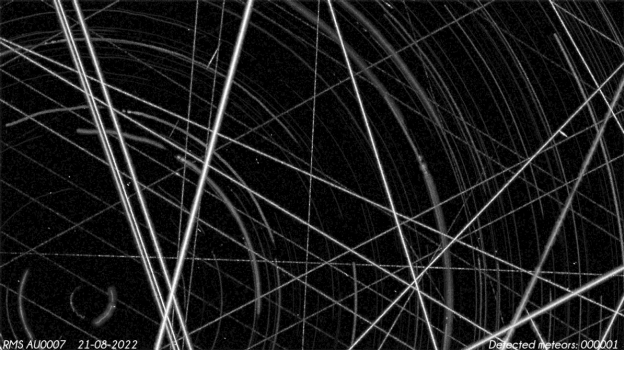
Le fotografie a lunga esposizione del cielo scattate dagli astronomi hanno già questo aspetto:
La foto qui sopra è stata scattata da un astronomo amatoriale in una località periferica dell’Australia occidentale. Le tracce circolari sono stelle. Le tracce diritte, molto più luminose, sono tutti satelliti, tranne una traccia che è una meteora.
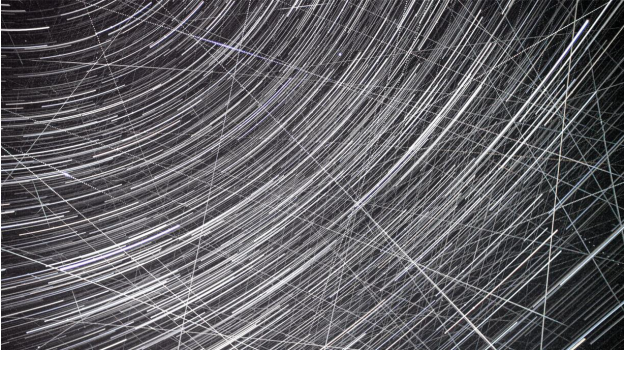
Di seguito è riportata un’esposizione di 77 minuti scattata dall’astronomo Dave Thanatos a Salisbury, in Inghilterra. In questo luogo più buio, le tracce circolari delle stelle sono più luminose delle tracce rettilinee delle meteore e dei satelliti che, tuttavia, riempiono l’intera cornice della fotografia. In questa immagine ci sono solo 10 meteore. Tutte le altre tracce rettilinee sono satelliti. E come ha detto l’astronomo scozzese Andy Lawrence, autore principale di “The Case for Space Environmentalism“(Il Caso per Ambientalismo nello Spazio), “Buona fortuna nel capire la differenza!”.
La fisica del plasma americana Sierra Solter ha implorato la FCC di “salvare il nostro cielo notturno… Per favore, per favore, non portatemi via lestelle. Sentire che il mio luogo di conforto e di calma – il cielo stellato – viene portato via e dato ai miliardari è soffocante”.
Il 18 dicembre 2023, la signora Solter ha pubblicato un articolo scientifico in cui espone i suoi timori per il nostro pianeta. Ognuno dei 42.000 satelliti Starlink previsti, ha scritto, ha una durata di vita progettata di soli 5 anni, dopo di che sarà de-orbitato, bruciato nell’atmosfera e sostituito. L’autrice ha calcolato che questo richiederà 23 satelliti al giorno, ciascuno delle dimensioni di un SUV o di un camion, per essere bruciati nell’atmosfera per sempre, lasciando che un’enorme quantità di sostanze chimiche tossiche e di polvere metallica si accumuli nell’aria che respiriamo e nella ionosfera.
Questo sta già accadendo, ha scritto l’autrice, e dovrebbe essere fermato se teniamo alle nostre vite. “Dall’inizio dell’industria spaziale, circa 20.000 tonnellate di materiale sono state demolite durante il rientro… Si tratta di una quantità di materiale 100 miliardi di volte superiore alla massa delle fasce di Van Allen”. Ha stimato che se 42.000 satelliti Starlink vengono dispiegati e regolarmente demoliti – per non parlare dei 1.000.000 di satelliti pianificati da altre aziende e governi – “ogni secondo l’industria spaziale aggiunge alla ionosfera una quantità di materiale conduttivo circa 2.000 volte superiore alla massa delle fasce di Van Allen”.
“A differenza dei meteoriti, che sono piccoli e contengono solo tracce di alluminio, questi relitti di navicelle spaziali sono enormi e sono costituiti interamente da alluminio e altri materiali esotici altamente conduttivi”, ha spiegato l’autrice in un articolo del 16 aprile 2024 sul Guardian.
Gran parte della polvere metallica si depositerà nella ionosfera dove, secondo l’autrice, potrebbe agire come scudo magnetico, riducendo l’ampiezza del campo magnetico terrestre nello spazio. Se ciò accadesse, l’atmosfera stessa potrebbe essere distrutta, perché il campo magnetico terrestre – la magnetosfera – è ciò che devia il vento solare e impedisce che porti via l’atmosfera della Terra, come ha detto Teresa Pulterova in un’intervista a Space.com.
Tra gli altri astronomi coinvolti nel contenzioso davanti alla FCC e ora alla Corte d’Appello ci sono Meredith Rawls dell’Osservatorio Vera C. Rubin in Cile; Gary Hunt di Action Against Satellite Light Pollution nel Regno Unito; Samantha Lawler dell’Università di Regina in Canada; Graeme Cuffy di Port of Spain, Trinidad e Tobago; Mark Phillips, presidente della Società Astronomica di Edimburgo; Roberto Trotta dell’Imperial Centre for Inference and Cosmology di Londra; Carrie Nugent, professore associato di fisica computazionale e scienze planetarie presso l’Olin College of Engineering in Massachusetts; e Cameron Nelson di Tenzing Startup Consultants in Virginia.
Nell’appello vengono citati anche altri problemi. Ad esempio, l’alluminio bruciato produce ossido di alluminio, che distrugge l’ozono e contribuisce al cambiamento climatico. Lo stesso vale per il vapore acqueo, la fuliggine e gli ossidi di azoto presenti negli scarichi dei razzi
Cameron Nelson ha dichiarato alla FCC che “gli esseri umani, per non parlare di tutte le altre forme di vita animale e vegetale, non hanno dato il loro consenso affinché SpaceX invii i segnali che propone nei nostri corpi e ci alteri irrevocabilmente”.
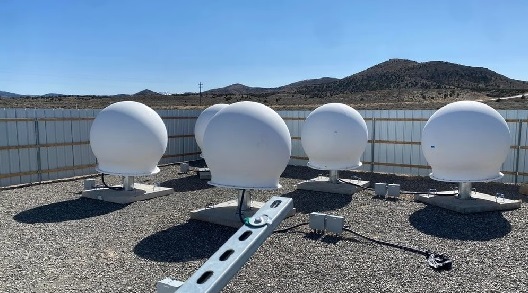
La BroadBand International Legal Action Network (BBILAN) ha menzionato le “radiazioni RF/EMF delle stazioni di base e di terra collegate” nei commenti inviati alla FCC. Le stazioni di terra Starlink, chiamate anche Gateway, sono molto più potenti delle antenne paraboliche Starlink installate nelle case. I 2,6 milioni di parabole Starlink (a marzo 2024) inviano ciascuna un segnale alla rete mobile di satelliti che le sovrasta. Tutto questo traffico è coordinato nello spazio da migliaia di laser che collegano i satelliti tra loro e a terra dai Gateway, che ritrasmettono le migliaia di segnali in una vasta area geografica da e verso i satelliti. Ecco come appare un Gateway con 5 antenne (“radome”):
Alcuni Gateway hanno fino a 40 radome. Ciascuna di queste cupole pesa 1750 chilogrammi. Ciascuna punta un fascio stretto verso i satelliti in movimento. Secondo i documenti depositati da SpaceX presso la FCC, ogni raggio può avere una potenza irradiata effettiva di oltre 1.000.000 di watt e può puntare fino a 25 gradi sopra l’orizzonte. Se siete un uccello, non volete volare vicino a un gateway Starlink. E se siete umani, non volete nemmeno vivere vicino a un gateway Starlink. Quando un satellite punta il suo fascio di migliaia di segnali verso un gateway, il fascio ha un diametro di circa 10 miglia quando raggiunge la Terra.
Robin è un’abbonata che vive in una zona remota dell’Idaho a meno di 3 miglia dal Gateway Starlink di Colburn. Scrive degli effetti sulla sua famiglia e sui suoi animali, effetti che scompaiono quando si trovano nella loro altra casa in Montana, dove sono circondati dalla foresta nazionale. Gli effetti sulle sue galline d’India sono simili a quelli di cui ho scritto nella mia ultima newsletter:
“Le nostre galline d’India fanno uno strano rumore mentre si muovono in cerchio. Questo accade solo in Idaho, dove viviamo a meno di 3 miglia da una stazione di terra di SpaceX. Non abbiamo mai visto questo fenomeno in Montana.
“Ci sono nate anche due cucciolate separate di cuccioli di Chihuahua. Entrambe le cucciolate presentavano difetti, entrambe hanno perso un cucciolo ed erano di taglia più piccola. La stessa cosa è successa con la nostra gatta, una piccola cucciolata, difetti alla nascita e la perdita di un gattino. L’anno scorso c’è stato un incendio e siamo stati costretti a tornare in Idaho e stiamo facendo TUTTI GLI SFORZI per allontanarci il prima possibile dal gateway e dalle parabole Starlink dei nostri vicini. La mia salute è un problema qui, ma quando torno a casa nel Montana sono completamente guarita, così come mio marito e mio figlio. Viviamo fuori dalla rete in entrambi i luoghi. Non c’è elettricità, non c’è acqua corrente, ed è un vero peccato quello che sta accadendo al mondo con tutti questi dispositivi costruiti dall’uomo”.
Quando si trova in Idaho, Robin soffre di vertigini estreme e nausea, emicranie brucianti, forti dolori alla colonna vertebrale e a tutte le articolazioni, formicolio alle dita delle mani e dei piedi, problemi di memoria, “forti dolori all’intestino e, a volte, dolori lancinanti alla cistifellea e al fegato”, bradicardia, dolori ai denti e infezioni ai seni paranasali e “forti palpitazioni cardiache al punto da farmi mancare il respiro mentre il cuore batte forte”. Il marito ha dolori articolari, minzione frequente durante la notte e mal di testa. Suo figlio ha aritmie cardiache, dolori lancinanti all’intestino e nebbia cerebrale. Lei e il marito sentono le radiazioni. “Sentiamo una sorta di codice Morse accelerato”, dice. “Quando torno a casa nel Montana sono completamente guarita, così come mio marito e mio figlio”.
Robin conosce molte persone nella sua zona che sono state colpite in modo simile. Aggiunge che “quando ci siamo trasferiti qui per la prima volta nel 2019 avevamo MOLTI uccelli. Ora abbiamo una primavera silenziosa, è come una zona morta. Ho sentito/visto un solo pettirosso e solo una manciata di uccelli. Avevamo 11 mangiatoie per colibrì e dall’anno scorso ne abbiamo solo una. C’erano parecchi orsi neri e un paio di orsi grizzly ma ora c’è solo un orso grizzly”.
All’ultimo conteggio c’erano 277 gateway Starlink in funzione o in costruzione nel mondo: 181 in Nord America e nei Caraibi, 26 in Sud America, 2 in Africa, 26 in Europa e 42 in Asia e nel Pacifico.
La FCC gestisce una pagina web in cui sono elencate migliaia di licenze rilasciate a centinaia di aziende per la gestione di stazioni terrestri satellitari fisse e mobili negli Stati Uniti. Alcune di queste stazioni sono molto più potenti dei gateway Starlink. La stazione di terra di SES a Bristol, in Virginia, emette fino a 1.900.000.000 di watt di potenza effettiva irradiata ed è autorizzata a puntare fino a 5 gradi sopra l’orizzonte. La stazione terrestre di SES a Brewster, Washington, è autorizzata a emettere quasi 1.000.000 di watt nella direzione effettiva dell’orizzonte! SES possiede O3b mPOWER, che è il sistema satellitare che aveva i suoi primi radome a bordo della nave da crociera Diamond Princess, la nave che ha avuto il famoso focolaio di malattia imputato a COVID-19 all’inizio della pandemia.
Abbonati alle mie newsletter. Visualizza tutte le newsletter precedenti. Condividi questa newsletter sui social media. Dona al nostro lavoro. CPTF è un’organizzazione no-profit (senza lucro)501(c)(3).
Last Friday, July 12, 2024, a 3-judge panel of the U.S. Court of Appeals for the D.C. Circuit gave the green light to SpaceX to keep on destroying our night sky and filling our atmosphere with metallic dust and toxic chemicals.
On December 29, 2022, the International Dark-Sky Association, representing astronomers all over the world, had appealed the decision of the Federal Communications Commission to grant SpaceX a license to launch up to 30,000 more satellites without performing an environmental review. See my newsletter of April 30, 2024 for details.
In Friday’s decision, the court ruled that satellite launches and deployment, no matter how many, “are deemed individually and cumulatively to have no significant effect on the quality of the human environment and are categorically excluded from environmental processing.”
The astronomers have 45 days to decide whether to appeal the 3-judge panel’s decision to the full 15-member Court of Appeals. Even if they do not do so, they can still appeal the panel’s decision to the U.S. Supreme Court within 90 days.
AT&T Must Maintain Its Landlines in California
On July 1, 2024, Californians won their fight to keep their landline telephones.
Last November, AT&T, which is the landline telephone provider in large parts of California, applied to the California Public Utility Commission (CPUC) for permission to abandon its landlines and end analog telephone service for most people in that state. Opposition to its application was overwhelming. The City and County of San Francisco, the County of San Mateo, the County of Santa Clara, the Media Alliance, Tahoe Energy Ratepayers, the Utility Reform Network, the Center for Accessible Technology, Catalina Island Connect, California Restoration LLC, and the California Farm Bureau Federation all participated in the proceeding and all opposed AT&T’s application. Even the Public Advocates Office of the CPUC opposed the application. And on June 25, 2024, the CPUC denied the application and ordered AT&T to keep maintaining its landlines.
Meanwhile, AT&T, in an attempt to go around the CPUC, lobbied the state legislature to enact a law allowing it to end landline service. On June 10, 2024, Assemblymember Tina McKinnor introduced a bill in the California legislature (AB-2797) that would have allowed every landline provider in California to abandon its landlines. But on July 1, under immense pressure from her constituents, Assemblymember McKinnor withdrew the bill.
“Just a little rain falling all around The grass lifts its head to the heavenly sound Just a little rain, just a little rain What have they done to the rain?”
– Malvina Reynolds
On September 23, 1998, 66 satellites, launched into low orbit by the Iridium Corporation, commenced broadcasting to the first ever satellite telephones. Those phones would work equally as well in mid-ocean, and in Antarctica, as in the middle of Los Angeles—a remarkable achievement.
But telephone interviews revealed that on that day exactly, electrically sensitive people all over the world experienced stabbing pains in their chest, knife-like sensations in their head, nosebleeds, asthma attacks, and other signs of severe electrical illness. Many did not think they were going to make it. Statistics published by the Centers for Disease Control reveal that the national death rate rose 4 to 5 percent during the following two weeks. Thousands of homing pigeons lost their way during those two weeks, all over the United States.
Many companies are now competing to provide not just cell phone service, but Wi-Fi and the equivalent of 5G, to every square inch of the earth from satellites in space in low earth orbit. They are planning not 66 satellites, but tens or even hundreds of thousands of satellites. There isn’t much time to prevent a global ecological catastrophe.
The companies with the biggest schemes include:
Amazon: 7,774 satellites
Astra Space: 13,620 satellites
Boeing: 5,936 satellites
Galaxy Space (China): 1,000 satellites
Guowang (China): 12,992 satellites
Hanwha Systems (South Korea): 2,000 satelliltes
Hughes Network: 1,440 satellites
Kepler (Canada): 712 satellites
Lynk (Hong Kong): 5,000 satellites
OneWeb (UK): 7,088 satellites
Roscosmos (Russia): 904 satellites
Rwanda Space Agency: 327,320 satellites
SatRevolution (Poland): 1,500 satellites
SN Space Systems (UK): 1,190 satellites
SpaceX: 42,000 satellites
Telesat (Canada): 1,671 satellites
Honeywell has already signed a memorandum of understanding to become OneWeb’s first large customer—it plans to provide high-speed WiFi on business, commercial, and military aircraft throughout the world.
SpaceX would like to provide the equivalent of 5G to every person on the planet.
Press image from OneWeb’s website
In addition to microwaving the Earth, these plans have the potential to destroy the Earth’s ozone layer and add to global warming.
The New York Times (May 14, 1991, p. 4) quoted Aleksandr Dunayev of the Russian Space Agency saying “About 300 launches of the space shuttle each year would be a catastrophe and the ozone layer would be completely destroyed.”
At that time, the world averaged only 12 rocket launches per year. Maintaining a fleet of 42,000 satellites, such as SpaceX is proposing to do, each with an expected lifespan of 5 years, will likely involve enough yearly rocket launches to be an environmental catastrophe.
Elon Musk’s SpaceX, added to the other huge satellite schemes, would require the launch of almost daily kerosene-burning rockets forever into the future.
It is a misconception that liquid fuels, such as kerosene, are environmentally friendly and destroy no ozone. This was analyzed in 2009 by scientists at the Aerospace Corporation in a paper titled “Limits on the Space Launch Market Related to Stratospheric Ozone Depletion.” They found that although liquid fuels do not contain chlorine, they still produce significant amounts of nitrogen and hydrogen oxides, as well as water vapor and soot when burned, all of which destroy ozone. “The assumption that liquid rocket engines are green as far as ozone is concerned is not correct,” they wrote. Even if liquid fuels optimistically destroyed only 2% as much ozone as solid fuels, a 50-fold increase in the rate of rocket launches, which is about to happen unless the world wakes up, would destroy just as much ozone. And the authors state that their 2% figure is little better than a guess because of “the nearly complete lack of data and models.”
Martin Ross of the Aerospace Corporation was also the lead author of a paper published in 2010 titled “Potential climate impact of black carbon emitted by rockets.” The authors developed a computer model to predict what would happen in different parts of the planet if the number of launches burning kerosene (then 25 annually) increased by a factor of 10. Their model predicts as much as a 4% loss of ozone over the tropics and subtropics, as much as a 3-degree Celsius summertime increase in temperature over the South Pole, more than a 1-degree Celsius overall increase in Antarctic temperature, and a decrease in Antarctic sea ice by 5% or more.
In a 2011 Aerospace article titled “Rocket Soot Emissions and Climate Change,” Ross states “The Aerospace study shows that the radiative forcing of soot from a given hydrocarbon rocket scenario is as much as 100,000 times that of the carbon dioxide from the rockets.” Obviously, the soot or black carbon emissions would be an important factor in accelerating climate change if the planned launches move forward.
Solid state rocket exhaust is no better. It contains ozone-destroying chlorine, water vapor (a greenhouse gas), and aluminum oxide particles, which seed stratospheric clouds. Complete ozone destruction is observed in the exhaust plumes of solid state rockets.
The finding, in 2018 , that stratospheric ozone is still declining despite the Montreal Protocol took everyone by surprise. The unrestrained proliferation of ever-more-powerful rocket launches may be one factor, but nobody is paying attention.